
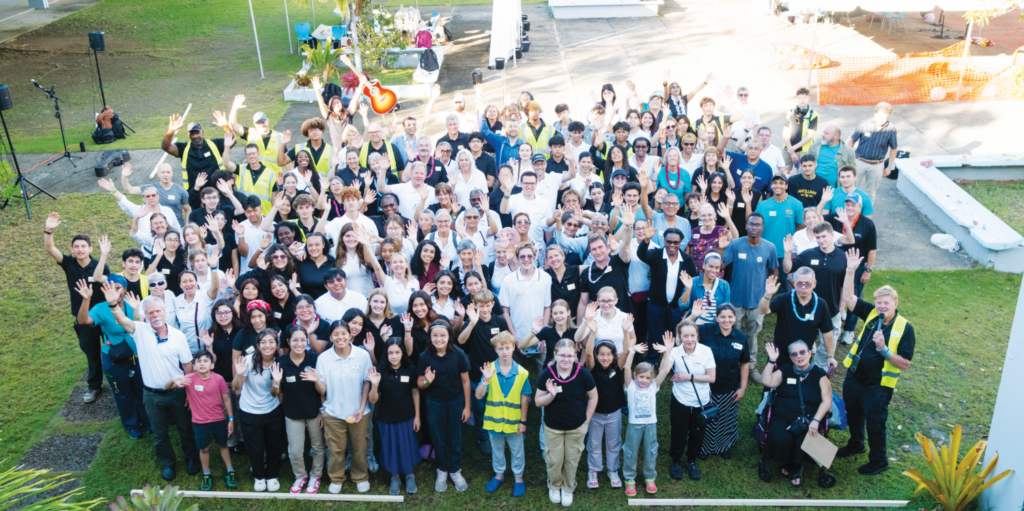
On the morning they were supposed to depart, everything pointed to cancellation. For the 47 students and sponsors from Thunderbird Adventist Academy, the long-anticipated mission trip to Puerto Rico appeared to be over before it began. Airline notifications, industry alerts, and widespread flight disruptions left faculty and students wondering whether they would ever reach their destination.
Instead of sinking into despair, trip organizer and leader Dr. Lela Lewis called the group to prayer.
Parents, church members, and students began praying—early in the morning, throughout the day, and even while standing in line at the airport. With no guarantees and uncertainty looming, Lewis felt a strong impression: Go to the airport, don’t ask questions, don’t doubt, just go.
With no clear knowledge of what might happen, the group moved forward in faith. One by one, bags were checked and boarding passes were printed. The departure screens told a remarkable story—nearly every flight was canceled, yet the students’ flight remained. The group arrived safely in Puerto Rico, stepping directly into a week of intense service, learning, and spiritual growth.
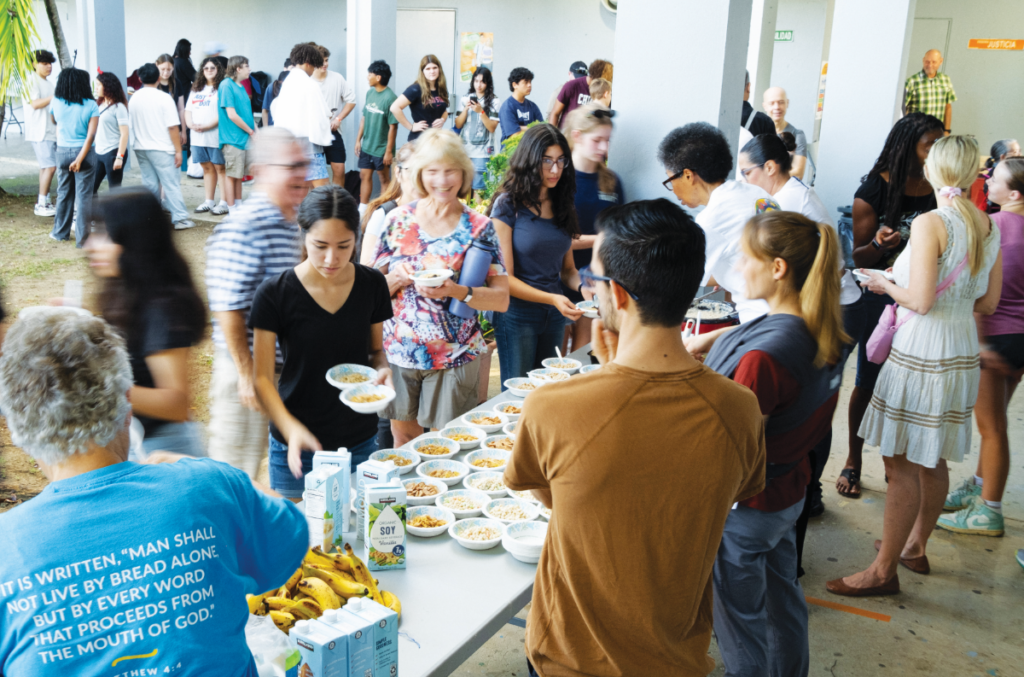
The trip’s purpose extended beyond providing medical services and doing community outreach on the island.
Lewis emphasized that the experience was designed to help students understand that mission is not reserved for adulthood or professional ministry. “I truly believe that the more we let young people experience missions, the more they feel invested in the church,” she shared. “They are the church right now—not sometime in the future.”
The outreach included medical and dental clinics, triage and pharmacy services, hospitality and logistics, children’s programs, mental health support, and community assistance. In many areas, access to consistent healthcare remains limited, leaving the local residents vulnerable.
For the students, the impact was deeply personal.
Several students served in leadership and coordination roles across departments. One student coordinator described how chaotic the medical operations felt at times—but also how empowering it was to be trusted to make decisions and help solve problems in real time.
Another student shared that doctors and professionals listened to her directions during clinic operations. “They trusted me,” she said. The experience helped her realize that her voice and leadership mattered.
That sense of trust became a defining theme. “They weren’t afraid to give the reins to the young people,” one participant explained. “We were trusted to help lead.”
For many students, it was the first time they had been treated not simply as helpers but as essential members of the mission team.
In the pharmacy and triage areas, students welcomed patients, guided them through the process, and supported medical providers. One student summarized the experience simply: “I feel like we were able to touch a lot of people’s hearts through Jesus.”
A student helping in the women’s health area admitted that she initially felt afraid and unprepared. At one point, she asked Lewis if she could be reassigned. Instead, she was encouraged to stay and push through. By the end of the day, her perspective had changed. She described how fear turned into purpose—and how learning to serve outside her comfort zone became one of the most meaningful lessons of the trip.
For some, the experience confirmed a calling. “I want to be a missionary doctor more than anything else,” one student said, after being invited by a patient to perform part of an exam so she could learn.
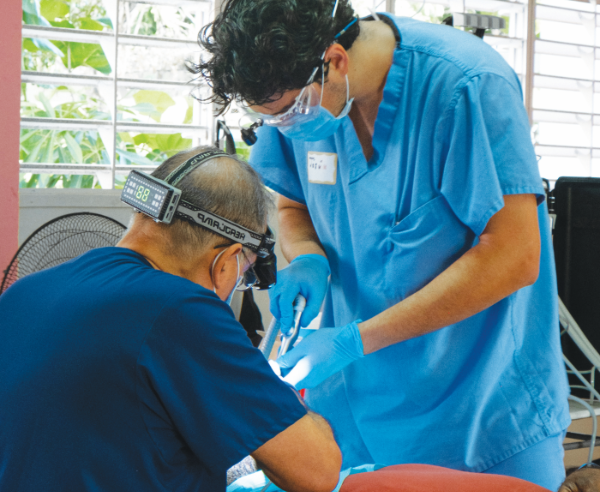
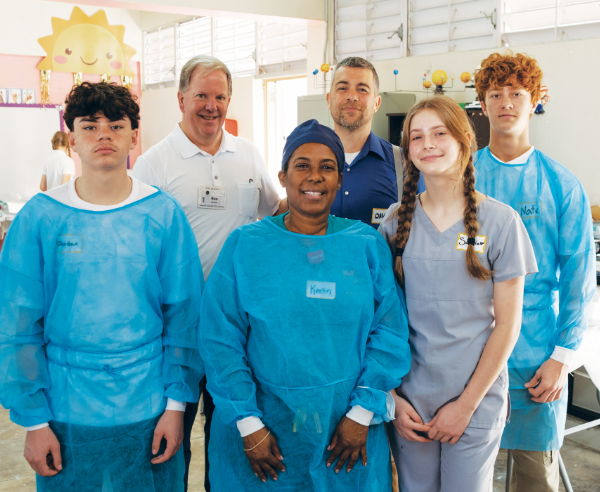
The same spirit of prayer that marked the beginning of the journey continued throughout the week when a critical patient logbook—required to move patients between departments—went missing. Students gathered into a circle and prayed. Within minutes, the book was found.
Students described it as one of many small but powerful reminders that God was present in every detail. “We saw miracle after miracle,” one student reflected.
Not all ministry happened inside clinic rooms.
While assisting with logistics, one student was stopped on the street by a woman urgently looking for a dentist. Although he was not part of the dental team, he guided her to the clinic location. Later that same day, she found him again—just to say thank you.
Students distributing food in the community were deeply affected when several people took multiple portions—uncertain when they would be able to eat again. The moment opened their eyes to the realities many families face every day.
For one student serving in the children’s area, the most meaningful experience came through a child. A young boy sat crying on the ground, unable to communicate clearly because of the language barrier and missing his mother, who was receiving medical care. The student stayed with him, gently walking around the campus and reassuring him again and again that his mother would return. Eventually, the boy stopped crying and began playing and drawing.
Later, the student reflected, “This reminded me that Jesus never leaves us. As a matter of fact, He didn’t leave us when we were on the trip; He proved to us that He was with us all the time. He proved to us that He was there by letting us go get on that plane.”
For Lewis, stories like these define the purpose of Adventist education. “When students are given real responsibility, they step up,” she said. “They take ownership.”
Beyond the clinics and programs, the trip created space for students to experience service as discipleship—to connect faith with action and compassion with leadership.
As students returned home, many expressed a shared desire to continue serving in their churches and communities. “This trip made me realize I want to be a medical missionary,” said one student, while another expressed, “This trip changed my life.”
Lewis recalled that on the way back, so many students were crying because they didn’t want to come home. “They didn’t want to leave Puerto Rico. Not because it was fun and exciting, but because they wanted to be part of missions. They wanted to continue to be active and involved.”
The journey began with closed doors, unanswered questions, and a decision to trust God enough to show up at the airport.
It ended with renewed vision, deeper faith, and a generation of young people discovering that mission is not something they will do someday.
Instead, it is something they are called to live, right now.
____________________
By Alexis Camacho
La fe en primer lugar: estudiantes de Thunderbird Adventist Academy en Puerto Rico
La mañana en que debían partir, todo apuntaba a la cancelación. Para los 47 estudiantes y patrocinadores de Thunderbird Adventist Academy, el tan esperado viaje misionero a Puerto Rico parecía haber terminado antes de comenzar. Las notificaciones de las aerolíneas, las alertas del sector y las interrupciones generalizadas en los vuelos dejaron a profesores y estudiantes preguntándose si alguna vez llegarían a su destino.
En lugar de hundirse en la desesperación, la organizadora y líder del viaje, la Dra. Lela Lewis, llamó al grupo a la oración.
Padres, miembros de iglesia y estudiantes comenzaron a orar —temprano por la mañana, a lo largo del día e incluso mientras hacían cola en el aeropuerto. Sin garantías y con la incertidumbre acechando, Lewis sintió una fuerte impresión: ve al aeropuerto, no hagas preguntas, no dudes, simplemente ve.
Sin un conocimiento claro de lo que podría ocurrir, el grupo siguió adelante por fe. Una a una, se facturaron las maletas y se imprimieron las tarjetas de abordaje. Las pantallas de salida contaban una historia extraordinaria: casi todos los vuelos estaban cancelados, menos el vuelo de los estudiantes. El grupo llegó sano y salvo a Puerto Rico, entrando directamente en una semana de intenso servicio, aprendizaje y crecimiento espiritual.
El propósito del viaje iba más allá de proporcionar servicios médicos y realizar actividades comunitarias en la isla.
Lewis enfatizó que la experiencia estaba diseñada para ayudar a los estudiantes a entender que la misión no está reservada para los adultos ni para el ministerio profesional. «Creo sinceramente que cuanto más dejamos que los jóvenes experimenten misiones, más se sienten implicados en la iglesia», compartió. «Ellos son la iglesia ahora mismo, no en algún momento futuro».
Su labor incluyó clínicas médicas y dentales, triaje y servicios de farmacia, hostelería y logística, programas infantiles, apoyo en salud mental y asistencia comunitaria. En muchas zonas, el acceso a una atención sanitaria constante sigue siendo limitado, dejando vulnerables a los residentes.
Para los estudiantes, el impacto fue profundamente personal.
Varios estudiantes desempeñaron roles de liderazgo y coordinación entre departamentos. Un coordinador estudiantil describió lo caóticas que se sentían las operaciones médicas a veces, pero también lo empoderador que era confiar en que tomase decisiones y ayudase a resolver problemas en tiempo real.
Otro estudiante compartió que los médicos y profesionales escucharon sus indicaciones durante las operaciones de la clínica. «Confiaban en mí», dijo. La experiencia le ayudó a darse cuenta de que su voz y liderazgo importaban.
Ese sentimiento de confianza se convirtió en un tema definitorio. «No tenían temor de ceder las riendas a los jóvenes», explicó uno de los participantes. «Se nos confió que ayudaríamos a liderar».
Para muchos estudiantes, era la primera vez que se les trataba no solo como ayudantes, sino como miembros esenciales del equipo misionero.
En las áreas de farmacia y triaje, los estudiantes daban la bienvenida a los pacientes, los guiaban durante el proceso y apoyaban a los proveedores médicos. Un estudiante resumió la experiencia de forma sencilla: «Siento que pudimos tocar el corazón de muchas personas a través de Jesús».
Una estudiante que ayudó en el área de salud de la mujer admitió que al principio se sintió temerosa y poco preparada. En un momento dado, le preguntó a Lewis si podía ser reasignada. En cambio, la animaron a quedarse y seguir adelante. Al final del día, su perspectiva había cambiado. Describió cómo el temor se convirtió en propósito y cómo aprender a servir fuera de su zona de confort se convirtió en una de las lecciones más significativas del viaje.
Para algunos, la experiencia confirmó una vocación. «Quiero ser doctora misionera más que nada», dijo una estudiante, tras ser invitada por una paciente a realizar parte de un examen.
El mismo espíritu de oración que marcó el inicio del viaje continuó durante toda la semana cuando desapareció un cuaderno de bitácora crítico de pacientes, necesario para mover pacientes entre departamentos. Los estudiantes se reunieron en círculo y oraron. En cuestión de minutos, el libro fue encontrado.
Los estudiantes lo describieron como uno de muchos recordatorios pequeños pero impactantes de que Dios estaba presente en cada detalle. «Vimos milagro tras milagro», reflexionó un estudiante.
No todo el ministerio ocurrió dentro de las salas de la clínica.
Mientras ayudaba con la logística, una estudiante fue detenida en la calle por una mujer que buscaba urgentemente a un dentista. Aunque no formaba parte del equipo dental, la guió hasta la ubicación de la clínica. Más tarde ese mismo día, la encontró de nuevo solo para darle las gracias.
Los estudiantes que repartían comida en la comunidad se vieron profundamente afectados cuando vieron a algunas personas tomaron varias raciones, sin saber cuándo podrían volver a comer. Ese momento les abrió los ojos a las realidades que muchas familias de esa comunidad enfrentan cada día.
Para un estudiante que trabajaba en el área infantil, la experiencia más significativa vino a través de un niño. Un niño pequeño estaba sentado llorando en el suelo, incapaz de comunicarse con claridad debido a la barrera del idioma y echando de menos a su madre, que recibía atención médica. El estudiante se quedó con él, paseándolo suavemente por el campus y asegurándole una y otra vez que su madre volvería. Finalmente, el niño dejó de llorar y empezó a jugar y a dibujar.
Más tarde, el estudiante reflexionó: «Eso me recordó que Jesús nunca nos abandona. De hecho, no nos dejó cuando estábamos en el viaje; nos demostró que estaba con nosotros todo el tiempo. Nos demostró que estaba allí permitiéndonos subir a ese avión».
Para Lewis, historias como esas definen el propósito de la educación adventista. «Cuando a los estudiantes se les da una responsabilidad real, dan un paso adelante», dijo. «Ellos se hacen cargo».
Más allá de las clínicas y los programas, el viaje creó un espacio para que los estudiantes experimentaran el servicio como discipulado: conectar la fe con la acción y la compasión con el liderazgo.
Al regresar a casa, muchos expresaron un deseo común de seguir sirviendo en sus iglesias y comunidades. «Ese viaje me hizo darme cuenta de que quiero ser misionero médico», dijo un estudiante, mientras otro expresó: «Ese viaje transformó mi vida».
Lewis recordó que, en el viaje de vuelta, muchos estudiantes lloraban porque no querían volver a casa. «No querían salir de Puerto Rico. No porque fuera divertido y emocionante, sino porque querían formar parte de la obra misionera. Querían seguir activos e implicados».
El viaje comenzó con puertas cerradas, preguntas sin respuestas y la decisión de confiar lo suficiente en Dios como para presentarse en el aeropuerto.
Terminó con una visión renovada, una fe más profunda y una generación de jóvenes descubriendo que la misión no es algo que algún día hagan. Sino que es algo a lo que están llamados a vivir, ahora mismo.
____________________
Por Alexis Camacho