
The Legacy of Moses’ Mother
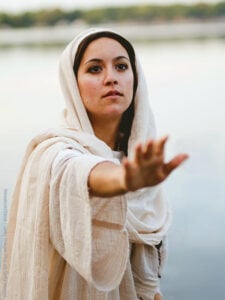
In the story of Moses—the great lawgiver, deliverer, and prophet—it’s easy to overlook the silent but pivotal figure behind his formative years: his mother, Jochebed. It’s proper that we not merely focus on Moses the deliverer but also on the mother whose faith, courage, and influence helped shape the man God would use to deliver Israel. The Bible and the Spirit of Prophecy together make it clear: behind every great calling, there is often a mother on her knees.
The world Moses was born into was hostile and terrifying for any Hebrew family. Pharaoh’s genocidal decree targeted every newborn Hebrew boy for death (Exodus 1:22). Yet, in this dark time, Jochebed shines as a woman of unwavering faith. The Bible says: “By faith Moses, when he was born, was hid three months of his parents…and they were not afraid of the king’s command” (Hebrews 11:23, NKJV).
Jochebed and Amram, her husband, defied Pharaoh not out of rebellion but out of reverence for God. Ellen White notes in Patriarchs and Prophets that “faith in God strengthened their hearts” and that Jochebed “earnestly prayed that [Moses] might be preserved from every corrupting influence” (pp. 242, 243).1 This is our first lesson: faithful motherhood resists fear with faith. Even when laws and culture turn against righteousness, mothers of courage quietly shape nations through their children.
When Jochebed could no longer hide her son, she built a small ark and placed him in the Nile (Exodus 2:3). This was not a moment of defeat but of surrender—she gave her child to God, trusting His providence. Her action parallels that of another faithful woman, Hannah, who gave Samuel to the Lord. Ellen White explains: “The mother’s earnest prayers had committed her child to the care of God; and angels, unseen, hovered above his lowly resting place” (p. 243). Jochebed’s surrender led to an astonishing turn: Pharaoh’s daughter found Moses and hired his own mother to nurse him. She was paid to raise the child she had risked everything to save (Exodus 2:9). What Jochebed gave up in faith, God returned in abundance. Lesson two: Surrender is not loss when it is to God. Parents, when you surrender your children into God’s hands through prayer and godly example, you invite divine intervention.
Jochebed had, at most, five to twelve years to influence Moses before he was handed over to Pharaoh’s court. In those tender, impressionable years, she taught him about the true God, justice, humility, and identity. She showed him how to kneel and pray. She engraved his heart with truth. Ellen White writes: “She endeavored to imbue his mind with the fear of God and the love of truth and justice.… The lessons learned at his mother’s side could not be forgotten” (pp. 243, 244).
Despite Egyptian wealth and paganism, Moses never forgot who he was or who his God was. His mother’s brief influence laid the moral and spiritual foundation that resisted an empire. Lesson three: Short time, long impact. Parents, and especially mothers: never underestimate those early years. A mother’s influence is stronger than palaces and courts when it is grounded in the fear of the Lord.
Moses’ greatness is traced not only to his calling but to his decisions. Hebrews 11:24-26 says: “By faith Moses, when he had grown up, refused to be known as the son of Pharaoh’s daughter. He chose to be mistreated along with the people of God.… He regarded disgrace for the sake of Christ as of greater value than the treasures of Egypt” (NIV). Where did he learn such sacrificial thinking? From the woman who risked everything to save him and prayed over him daily. From the woman who taught him about a God who is worth suffering for. Ellen White says: “How far-reaching in its results was the influence of that one Hebrew woman, and she an exile and a slave…working not alone for time, but for eternity” (p. 244). Jochebed’s faith became Moses’ foundation. Her courage became his resolve. Her prayers echoed into his destiny. Lesson four: Your life preaches louder than your lips. What Jochebed lived in front of Moses stuck deeper than what she said.
We live in a world that is again hostile to children’s spiritual lives. Social media, confusion about identity, secular education, and the pressures of modern life challenge every home. But God still works through mothers like Jochebed. Mothers today may not face Pharaoh’s sword, but they face emotional, spiritual, and social battles. You may feel hidden, unheard, or exhausted. But God sees. Heaven is not moved by titles or degrees but by faithfulness in hidden things. Ellen White says: “There is no other work that can equal [a mother’s].… She is sowing seed that will spring up and bear fruit, either for good or for evil” (p. 244) . Your lap is the first altar. Your arms are a child’s first sanctuary. Your prayers may shape prophets. Your example may build deliverers. You may not be remembered by name, but your children will carry your legacy.
Jochebed’s story reminds us that God uses humble, faithful mothers to shape history. Though uncelebrated in her time, she shaped a child who would confront kings, part seas, and receive the law of God. So to every mother: your calling is not small. Like Jochebed, you may raise the next Moses—not with riches or status but with love, truth, prayer, and faith. “Let every mother feel that her moments are priceless; her work will be tested in the solemn day of accounts” (p. 244). May we, like Jochebed, entrust our children to the God who sees and answers. May we invest in eternity, for every child is precious in His sight.
_____________________________
Virginia Felix writes from San Ysidro, California.
1All Ellen White quotes are from Patriarchs and Prophets, Chapter 22, “Moses.”
La mano invisible: El legado de la madre de Moisés
Por Virgina Felix
En la historia de Moisés —el gran legislador, libertador y profeta— es fácil pasar por alto a la figura silenciosa pero fundamental detrás de sus años formativos: su madre, Jocabed. Es correcto que no nos centremos solo en Moisés el libertador, sino también en la madre cuya fe, valor e influencia ayudaron a formar al hombre que Dios usaría para liberar a Israel. La Biblia y el Espíritu de la Profecía lo dejan claro: detrás de cada gran llamado a menudo hay una madre de rodillas.
El mundo en el que nació Moisés era hostil y aterrador para cualquier familia hebrea. El decreto genocida del faraón tenía como objetivo la muerte a cada niño hebreo recién nacido (Éxodo 1:22). Sin embargo, en esos tiempos oscuros, Jocabed brilla como una mujer de fe inquebrantable. La Biblia dice: «Por la fe el recién nacido Moisés fue escondido por sus padres durante tres meses… y no tuvieron miedo del edicto del rey» (Hebreos 11:23).
Jocabed y Amram, su marido, desafiaron al faraón no por rebeldía, sino por reverencia a Dios. Ellen White anota en Patriarcas y profetas que «la fe en Dios fortaleció sus corazones» y que Jocabed «oró fervientemente para que [Moisés] pudiera ser preservado de toda influencia corruptora» (pp. 242, 243).1 Esa es nuestra primera lección: la maternidad fiel resiste el temor con fe. Incluso cuando las leyes y la cultura se vuelven en contra de lo correcto, las madres valientes moldean silenciosamente a las naciones a través de sus hijos.
Cuando Jocabed ya no pudo ocultar a su hijo, construyó una pequeña arca y la arrojó al Nilo (Éxodo 2:3). No fue un momento de derrota sino de rendición: entregó a su hijo a Dios, confiando en su providencia. Su acción es paralela a la de otra mujer fiel, Ana, que entregó a Samuel al Señor. Ellen White explica: «Las oraciones sinceras de la madre habían confiado a su hijo al cuidado de Dios; y ángeles, invisibles, flotaban sobre su humilde lugar de descanso» (p. 243). La rendición de Jocabed provocó un giro asombroso: la hija del faraón encontró a Moisés y contrató a su propia madre para cuidarle. Le pagaron para criar al niño por el que había arriesgado todo (Éxodo 2:9). Lo que Jocabed renunció en fe, Dios lo devolvió en abundancia. Segunda lección: Rendirse no es pérdida cuando es ante Dios. Padres, cuando entregan a sus hijos a las manos de Dios mediante la oración y el ejemplo piadoso, invitan a la intervención divina.
Jocabed tuvo, como mucho, entre cinco y doce años para influir en Moisés antes de ser entregado a la corte de faraón. En esos años tiernos e impresionables, le enseñó sobre el verdadero Dios, la justicia, la humildad y la identidad. Le enseñó a arrodillarse y orar. Grabó la verdad en su corazón. Ellen White escribe: «Se esforzó por impregnar su mente del temor de Dios y del amor a la verdad y la justicia…. Las lecciones aprendidas por parte de su madre no podían ser olvidadas» (pp. 243, 244).
A pesar de la riqueza y el paganismo egipcios, Moisés nunca olvidó quién era ni quién era su Dios. La breve influencia de su madre sentó las bases morales y espirituales que resistieron un imperio. Tercera lección: Poco tiempo, largo impacto. Padres, y especialmente madres: nunca subestimen esos primeros años. La influencia de una madre es más fuerte que los palacios y cortes cuando se basa en el temor del Señor.
La grandeza de Moisés se atribuye no solo a su vocación, sino a sus decisiones. Hebreos 11:24-26 dice: «Por fe, Moisés, cuando creció, se negó a ser conocido como hijo de la hija del faraón. Eligió ser maltratado junto con el pueblo de Dios…. Consideraba la desgracia por el amor de Cristo de mayor valor que los tesoros de Egipto». ¿Dónde aprendió ese pensamiento sacrificial? De la mujer que arriesgó todo para salvarlo y oró por él a diario. De la mujer que le enseñó sobre un Dios por el que merece la pena sufrir. Ellen White dice: « ¡Cuán grande había sido en sus resultados la influencia de aquella mujer hebrea, a pesar de ser una esclava desterrada! …no solamente para el presente sino también para la eternidad» (p. 222). La fe de Jocabed se convirtió en la base de Moisés. Su valor se convirtió en su determinación. Sus oraciones resonaron en su destino. Cuarta lección: Tu vida predica más fuerte que tus labios. Lo que Jocabed vivió delante de Moisés se quedó más en su mente de lo que ella dijo.
Vivimos en un mundo que vuelve a ser hostil a la vida espiritual de los niños. Las redes sociales, la confusión sobre la identidad, la educación laica y las presiones de la vida moderna desafían a todos los hogares. Pero Dios sigue actuando a través de madres como Jocabed. Hoy en día, las madres quizá no se enfrenten a la espada de faraón, pero enfrentan batallas emocionales, espirituales y sociales. Puedes sentirte oculta, ignorada o agotada. Pero Dios te ve. El cielo no se mueve por títulos o grados, sino por la fidelidad en las cosas ocultas. Ellen White dice: «No hay otra obra que pueda igualar [la de una madre]…. Está sembrando semillas que brotarán y darán fruto, ya sea para bien o para mal» (p. 244). Tu regazo es el primer altar. Tus brazos son el primer santuario de un niño. Tus oraciones pueden moldear profetas. Tu ejemplo puede producir liberadores. Puede que no te recuerden por tu nombre, pero tus hijos llevarán tu legado.
La historia de Jocabed nos recuerda que Dios utiliza a madres humildes y fieles para moldear la historia. Aunque no celebrada en su época, formó a un niño que se enfrentaría a reyes, partiría mares y recibiría la ley de Dios. Así que a toda madre: tu vocación no es pequeña. Como Jocabed, puedes criar al próximo Moisés —no con riquezas ni estatus, sino con amor, verdad, oración y fe. «Que cada madre sienta que sus momentos son invaluables; su obra será puesta a prueba en el solemne día de cuentas» (p. 244). Que nosotras, como Jocabed, confiemos a nuestros hijos al Dios que ve y responde. Que invirtamos en la eternidad, porque cada niño es precioso ante sus ojos.
_____________________________
Virginia Felix escribe desde San Ysidro, California.
1Todas las citas de Ellen White son de Patriarcas y Profetas, capítulo 22.