
With Clarity, Courage, and Compassion

“The Life-Light blazed out of the darkness; the darkness couldn’t put it out.”
John 1:5, The Message
At Adventist Health, healthcare takes place within a framework of faith. Physicians, nurses, administrators, and teams in specialty after specialty shine God’s light through the care they provide, revealing God’s love for patients and family members from all walks of life.
In a time when healthcare faces extraordinary pressures, light helps us see clearly, lead courageously, and serve compassionately. Across every department, discipline, and community in our care, every part of our work can shine for good.
Chaplains Jahdiel Matos and Cecilia Laupati share two stories of light blazing with God’s love out of the darkness.
‘Do You Have a Miracle?’
Faith, Medicine, and Human Suffering
By Jahdiel Matos, staff chaplain, Adventist Health Glendale
Do you have a miracle?” That was the question the patient’s sister asked me after physicians had pronounced her sister brain dead.
Earlier that morning, the patient had suffered a cardiac arrest while alone at home. Her husband was at work, and their children were in school. During a FaceTime call, her husband noticed something was wrong. Within moments, he called 911 and rushed home, arriving while paramedics were still attempting resuscitation efforts. She was transported to the hospital and admitted to the ICU. By that afternoon, the family was receiving devastating news no one is ever prepared to hear.

I received a call from the nurse requesting chaplain support for the husband, who was sitting alone at the bedside, visibly overwhelmed and in shock. I introduced myself and asked if I could sit beside him. He nodded quietly.
“I do not know what I’m going to tell the kids,” he said through tears. “Do you have any words for me?”
‘Keep your head where your feet are’
As chaplains, we often enter rooms where there are no adequate answers. In moments of acute crisis, families move rapidly through disbelief, confusion, anger, guilt, fear, and emotional numbness. The chaplain’s role is not to remove grief but to create space where grief can safely exist.
I listened as the husband described his children: a 16-year-old son, two younger daughters, and an older daughter studying abroad. His concern was no longer for himself. It was for them.
“I just want to be strong for my kids,” he repeated.
Together, we talked through how he might begin the conversation with them. We discussed using simple and honest language appropriate for their age and emotional state. Crisis often overwhelms a family’s ability to process information, and spiritual care sometimes means helping people take one emotional step at a time.
A short time later, the husband returned with his teenage son and his wife’s sister. From outside the glass ICU doors, I watched the boy fall to his knees beside his mother’s bed, holding her hand and weeping. The room was heavy.
My own heart began to race.
For a moment, I thought about my own family. I could feel the emotional pull to enter the grief too personally. In chaplaincy, we call this countertransference—when our own experiences, fears, or family dynamics become activated in the encounter. Remaining present requires not only compassion but self-awareness.
I remembered the words of one of my educators: “Keep your head where your feet are.”
So, I paused, took a breath, and grounded myself before entering the room.
Permission to ask hard questions
The son began asking questions no textbook can fully answer.
“Why can’t she open her eyes?”
“Can she hear me?”
“Did she know I loved her?”
“I don’t remember the last thing I told her.”
Then, after a long silence, he looked at me and said, “I consider myself a Christian…at least I think I am. But why does this happen?”
There are moments when chaplains must resist the temptation to explain suffering. Presence is often more healing than certainty.
I told him his question was valid. Human beings naturally try to make meaning out of pain. Faith does not eliminate lament; sometimes faith gives us permission to ask the hardest questions.
I gently invited him to consider another perspective.
“For 16 years,” I said softly, “you had what you describe as the best mom in the world.”
The room became quiet again.
I asked him what his heart still needed to tell her. He leaned over his mother, held her hand tighter, and began speaking to her through tears. He thanked her. He told her he loved her. He shared memories. Regrets. Gratitude.
In many ways, that moment became the miracle the family did not expect. Not a reversal of brain death. Not a supernatural cure. But connection. Truth. Love expressed while there was still time.
Later that evening, the younger daughters arrived wearing pink, their mother’s favorite color. Kneeling beside them, I explained in simple terms what was happening and encouraged them to ask questions. Children grieve differently than adults; they often move in and out of understanding rapidly, asking difficult questions while simultaneously searching for emotional safety.
Carrying pain together
Over the next several days, I continued walking with the family through an honor walk ceremony and funeral services. For the honor walk, hundreds of people lined the hospital hallways—staff, friends, teachers, and community members—gathering to honor the patient’s organ donation and legacy. The family invited me to walk beside them in the procession. Pink shirts filled the hallway while her favorite song played softly in the background.
Weeks later, I still find myself reflecting on that family.
Chaplaincy has taught me that miracles do not always look the way we expect them to. Sometimes the miracle is reconciliation. Sometimes it is forgiveness. Sometimes it is the courage to say, “I love you.” Sometimes it is discovering that even in devastating grief, people do not have to suffer alone.
My presence did not take away the family’s pain. Their loss remained real and irreversible, but I learned from this experience that shared pain weighs less and hurts differently because it is carried together.
Working in hospital corridors and ICU rooms has convinced me of one truth above all others: Life is fragile. Many people wait too long to begin the conversations that matter most.
Perhaps the miracle is not only surviving. Perhaps the miracle is that love still finds ways to speak, even in the middle of goodbyes.
How Does It Look to be a Light Unto the Path?
One of our Emergency Department nurses, Maureen, exemplifies being a light in the darkness. We have a certain young patient that comes to our ED once or twice a week. She always asks for a chaplain to read and pray with her. Maureen has known our young guest over a year and is invested in her wellbeing.
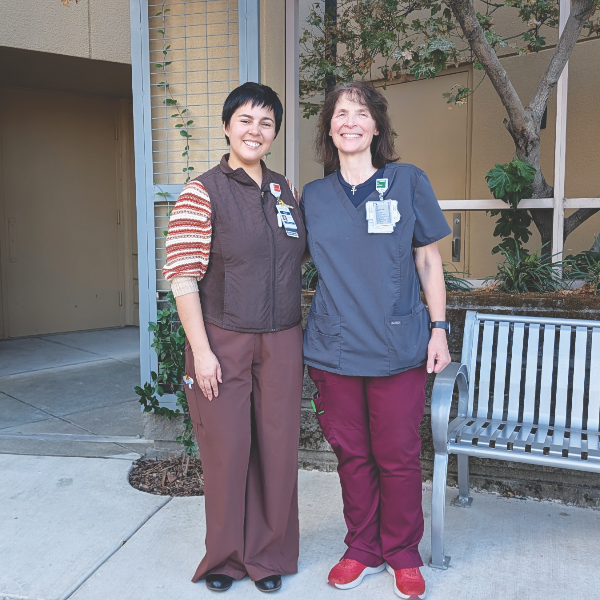
“She and I have a special relationship,” Maureen told me. “The first time I tended to her, she screamed at me, ‘You’re not giving me what I want! I hate you!’ I told her, ‘Good, that means I’m doing my job taking care of you.’ That startled her! She realized screaming and punching wouldn’t scare me off. Over the weeks, she started believing me, that I would be there for her. She does well when she’s given structure and activities to keep her mind moving.
“The school tells us this patient will be lucky to reach a low reading level,” Maureen said. “I’m positive we can get her to a higher level. I print out times tables for her and spelling pages, and she does them! Too many adults in her life tell her she won’t be a child for long, that ‘real life’ is just around the corner. How will she fare? She needs someone to encourage her, to help her feel like she can rise from her circumstances.”
Maureen has inspired our spiritual care team in ways we can participate in our patient’s growth, peace, and learning. Yes, we can help calm her when she’s with us, but we can also motivate her for life outside the hospital.
Maureen’s story reminds me of Psalm 119:105: “Thy word is a lamp unto my feet, and a light unto my path” (KJV). When I think of our young friend acting and reacting to her circumstances, I realize she may have a small view—a dark room where she waits to meet the next person, and the next, and the next. If just one person steps into that darkness and engages with her anger and hurt, they could illuminate not just her feet in this moment but a path forward and upward. She could start to see a future with education and graduation—growing, trusting, and seeing a path where she has options. That’s an incredible gift.
It takes just one person to say, “I believe in you. You were made for more than this. Let’s see life beyond your two feet and your two hands. Let’s illuminate your path toward hope and a future.”
Una luz que brilla
con claridad, valor y compasión
«La luz de la vida resplandeció en medio de las tinieblas; las tinieblas no pudieron apagarla» —Juan 1:5.
En Adventist Health, la atención médica se brinda en un marco de fe. Médicos, personal de enfermería, administradores y equipos de las distintas especialidades hacen brillar la luz de Dios mediante la atención que ofrecen, revelando su amor por los pacientes y sus familiares de todas las condiciones sociales.
En una época en que la atención médica afronta presiones extraordinarias, la luz nos ayuda a ver con claridad, liderar con valor y servir con compasión. En cada departamento, disciplina y comunidad que atendemos, cada aspecto de nuestro trabajo puede brillar para hacer el bien.
Los capellanes Jahdiel Matos y Cecilia Laupati comparten dos relatos en los que la luz del amor de Dios resplandece en medio de las tinieblas.
«¿Tienes un milagro?»
Fe, medicina y el sufrimiento humano
por Jahdiel Matos, capellán de Adventist Health Glendale
Tiene un milagro?». Esa fue la pregunta que me hizo la hermana de la paciente después de que los médicos declararan que su hermana tenía muerte cerebral.
Esa mañana, la paciente había sufrido un paro cardíaco mientras estaba sola en casa. Su esposo estaba en el trabajo y sus hijos en la escuela. Durante una llamada por FaceTime, su esposo notó que algo andaba mal. En cuestión de momentos llamó al 911 y se apresuró a regresar a casa. Llegó cuando los paramédicos aún intentaban reanimarla. La trasladaron al hospital y la ingresaron en la unidad de cuidados intensivos. Esa misma tarde, la familia recibía una noticia devastadora que nadie está jamás preparado para escuchar.
Recibí una llamada del personal de enfermería solicitando el apoyo de un capellán para el esposo, que estaba sentado solo junto a la cama, visiblemente abrumado y conmocionado. Me presenté y le pregunté si podía sentarme a su lado. Asintió en silencio.
«No sé qué voy a decirles a los niños», dijo entre lágrimas. «¿Tiene algunas palabras para mí?»
Mantén la cabeza donde están tus pies
Como capellanes, a menudo entramos en habitaciones donde no hay respuestas adecuadas. En momentos de crisis aguda, las familias pasan rápidamente por la incredulidad, la confusión, la ira, la culpa, el temor y el entumecimiento emocional. La función del capellán no es eliminar el dolor, sino crear un espacio donde pueda expresarse con seguridad.
Escuché al esposo mientras me hablaba de sus hijos: un muchacho de 16 años, dos hijas menores y una hija mayor que estudiaba en el extranjero. Su preocupación no era por sí mismo. Era por ellos.
«Solo quiero ser fuerte por mis hijos», repetía.
Juntos hablamos de cómo podría iniciar la conversación con ellos. Consideramos la importancia de emplear un lenguaje sencillo y honesto, apropiado para su edad y su estado emocional. Una crisis suele desbordar la capacidad de una familia para procesar la información y a veces la atención espiritual consiste en ayudar a las personas a avanzar un paso emocional a la vez.
Poco después, el esposo regresó con su hijo adolescente y la hermana de su esposa. Desde afuera, a través de las puertas de vidrio de la unidad de cuidados intensivos, vi al muchacho caer de rodillas junto a la cama de su madre, tomarle la mano y llorar. El dolor llenaba la habitación.
Mi propio corazón comenzó a acelerarse.
Por un momento pensé en mi familia. Sentí el impulso emocional de involucrarme demasiado personalmente en aquel dolor. En la capellanía llamamos a eso contratransferencia: cuando nuestras experiencias, temores o dinámicas familiares se activan ante la situación. Mantenernos presentes requiere no solo compasión, sino también consciencia de nosotros mismos.
Recordé las palabras de uno de mis instructores: «Mantén la cabeza donde están tus pies».
Así que me detuve, respiré y volví a centrarme en el momento presente antes de entrar en la habitación.
Permiso para hacer preguntas difíciles
El hijo comenzó a hacer preguntas que ningún libro de texto puede responder plenamente.
«¿Por qué no puede abrir los ojos?»
«¿Puede oírme?»
«¿Sabía que la amaba?»
«No recuerdo lo último que le dije».
Luego, tras un largo silencio, me miró y dijo: «Me considero cristiano… al menos creo que lo soy. Pero ¿por qué sucede esto?»
Hay momentos en que los capellanes debemos resistir la tentación de explicar el sufrimiento. La presencia suele sanar más que la certeza.
Le dije que su pregunta era válida. Los seres humanos procuramos, de manera natural, encontrarle sentido al dolor. La fe no elimina el lamento; a veces nos da permiso para hacer las preguntas más difíciles.
Con delicadeza, lo invité a considerar otra perspectiva.
«Durante 16 años —le dije suavemente— tuviste a quien describes como la mejor mamá del mundo».
La habitación volvió a quedar en silencio.
Le pregunté qué necesitaba aún decirle su corazón. Se inclinó sobre su madre, le tomó la mano con más fuerza y comenzó a hablarle entre lágrimas. Le dio las gracias. Le dijo que la amaba. Compartió recuerdos, remordimientos y gratitud.
En muchos sentidos, aquel momento se convirtió en el milagro que la familia no esperaba. No se revirtió la muerte cerebral. No hubo una curación sobrenatural. Pero hubo conexión, verdad y amor expresado mientras aún había tiempo.
Más tarde esa noche llegaron las hijas menores vestidas de rosa, el color favorito de su madre. Me arrodillé junto a ellas, les expliqué con palabras sencillas lo que estaba sucediendo y las animé a hacer preguntas. Los niños viven el duelo de manera distinta a los adultos; a menudo pasan rápidamente de comprender lo ocurrido a dejar de comprenderlo, y hacen preguntas difíciles mientras buscan, al mismo tiempo, seguridad emocional.
Llevar juntos el dolor
Durante los días siguientes continué acompañando a la familia en la ceremonia del recorrido de honor y en los servicios fúnebres. Para el recorrido de honor, cientos de personas se colocaron a lo largo de los pasillos del hospital: personal, amigos, maestros y miembros de la comunidad, reunidos para honrar la donación de órganos de la paciente y su legado. La familia me invitó a caminar a su lado en la procesión. Las camisetas rosadas llenaban el pasillo mientras su canción favorita sonaba suavemente de fondo.
Semanas después, todavía me descubro pensando en aquella familia.
La capellanía me ha enseñado que los milagros no siempre tienen la forma que esperamos. A veces el milagro es la reconciliación. A veces es el perdón. A veces es el valor de decir: «Te amo». A veces es descubrir que, incluso en medio de un duelo devastador, las personas no tienen que sufrir solas.
Mi presencia no eliminó el dolor de la familia. Su pérdida seguía siendo real e irreversible, pero aquella experiencia me enseñó que el dolor compartido pesa menos y duele de otra manera porque lo llevamos juntos.
Trabajar en los pasillos de los hospitales y en las habitaciones de cuidados intensivos me ha convencido de una verdad por encima de todas las demás: la vida es frágil. Muchas personas esperan demasiado para iniciar las conversaciones que más importan.
Quizá el milagro no sea únicamente sobrevivir. Quizá el milagro sea que el amor todavía encuentre maneras de expresarse, incluso en medio de las despedidas.
¿Qué significa ser una luz en el camino?
Maureen, una de nuestras enfermeras del departamento de urgencias, es un ejemplo de lo que significa ser una luz en medio de las tinieblas. Tenemos una joven paciente que acude a urgencias una o dos veces por semana. Siempre pide que un capellán lea y ore con ella. Maureen conoce a nuestra joven visitante desde hace más de un año y se preocupa por su bienestar.
«Ella y yo tenemos una relación especial —me contó Maureen—. La primera vez que la atendí, me gritó: “¡No me estás dando lo que quiero! ¡Te odio!”. Le respondí: “Bien, eso significa que estoy haciendo mi trabajo al cuidarte”. ¡Eso la sorprendió! Se dio cuenta de que sus gritos y golpes no me harían alejarme. Con el paso de las semanas empezó a creerme, a confiar en que estaría ahí para ella. Le va bien cuando se le ofrecen una rutina organizada y actividades que mantengan su mente activa.
»En la escuela nos dicen que esa paciente tendrá suerte si alcanza siquiera un nivel básico de lectura —dijo Maureen—. Estoy convencida de que podemos ayudarla a alcanzar un nivel más alto. Le imprimo tablas de multiplicar y hojas de ejercicios de ortografía, ¡y los hace! Demasiados adultos en su vida le dicen que no será niña por mucho tiempo, que la “vida real” está a la vuelta de la esquina. ¿Cómo le irá? Necesita a alguien que la anime, que la ayude a sentir que puede superar sus circunstancias».
Maureen ha inspirado a nuestro equipo de atención espiritual a encontrar maneras de contribuir al crecimiento, la paz y el aprendizaje de nuestra paciente. Sí, podemos ayudarla a tranquilizarse cuando está con nosotros, pero también podemos motivarla para la vida fuera del hospital.
La historia de Maureen me recuerda Salmo 119:105: «Lámpara es a mis pies tu palabra, y lumbrera a mi camino». Cuando pienso en cómo nuestra joven amiga actúa y reacciona ante sus circunstancias, comprendo que quizá su perspectiva sea limitada: una habitación oscura donde espera encontrarse con la siguiente persona, y luego con otra, y con otra. Si una sola persona entra en esa oscuridad y atiende su ira y su dolor, podría iluminar no solo sus pies en ese momento, sino también un camino para avanzar y superarse. Podría empezar a vislumbrar un futuro en el que estudie y se gradúe; podría crecer, confiar y descubrir un camino en el que tenga opciones. Ese es un regalo extraordinario.
Basta con que una persona diga: «Creo en ti. Fuiste creada para algo más que esto. Miremos la vida más allá de tus dos pies y tus dos manos. Iluminemos tu camino hacia la esperanza y un futuro».