
Dorothy Womack’s Lifelong Call to Ministry
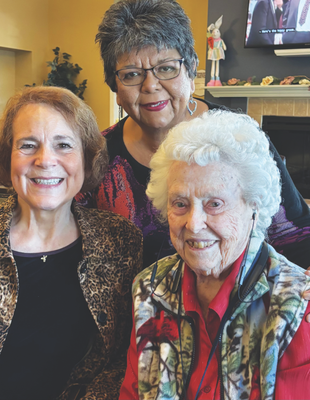
“When confronted with workplace challenges, she demonstrated moral courage, standing firm in her ministry and in the calling she believed God had entrusted to her.”
Dorothy Womack has been blessed with a strong sense of being called by God to share His grace. Now, at age 101, she will be recognized with others at the October 24 Association of Adventist Women’s Woman of the Year Awards Banquet in the Loma Linda University church fellowship hall.
Womack was the first woman chaplain of Loma Linda University Medical Center (LLUMC). In 1975 she was hired to do chaplaincy and Bible work, which included following up on patients in their homes after discharge. Finding practical solutions for her patients sometimes meant opening her home to those needing to remain in the area for treatment, offering not only shelter but compassion, dignity, and hope.
While she received much encouragement for her work as chaplain, this was a time in Adventist church history when there was opposition to women in ministry. Although a resolution to ordain women to the gospel ministry occurred at the 1881 General Conference Session, it was never formally implemented. Even so, some women were pastors and evangelists, and Ellen White was issued several ordination certificates.
In 1975 Womack was a delegate to the General Conference Session in Vienna, where she heard negative discussions about women pastors. “I did not allow that to dampen my unwavering determination to pursue ministry,” she said. Even though she personally felt strong resistance in her work as a chaplain, she remained committed to God’s call throughout her life.
Fellow chaplain Sam Geli recalls that her beeper was on whether she was on-call or not. If other chaplains needed coverage or if there was an emergency, she was always available. He remembers her empathy for people, how carefully she listened, and how she responded in relevant and relational ways to their needs.
Yucaipa church member Ruth Peeters, a former social worker at LLUMC, remembers that Womack embodied remarkable resilience and inner strength even in the face of misunderstanding, bias, and institutional limitations. “When confronted with workplace challenges, she demonstrated moral courage, standing firm in her ministry and in the calling she believed God had entrusted to her.”
When asked what helped prepare her for ministry, she said, “My experiences in literature evangelism, work as a Bible instructor, and teaching Sabbath School. These experiences taught me to meet and speak to people about faith, to listen to their needs, and to point them to Jesus as their certain hope.”
She learned that listening to people is the best gift you can give, especially as death approaches. She published a sensitive article about end-of-life issues entitled “A Listening Ear at the Hour of Death” in the June 1978 issue of Ministry Magazine. Her insights on this subject reveal her compassion for suffering and dying people, their families, and the medical staff who care for them.
After Womack left chaplaincy, for two years she served as interest coordinator and Bible counselor with the Voice of Prophecy. She found ministry opportunities with the Quiet Hour radio program, organizing volunteers to answer the phone line for prayer, Bible counseling, and book offers. The main focus was on prayer, encouraging people to share their hurts, disappointments, and joys.
In 1995 Womack began pastoral ministry in the Yucaipa church with Pastor Norm Farely, who had worked with her in Orange County and appreciated her God-given talent for ministry.
Later, Pastor Douglas Elsey was assigned to the Yucaipa church. Being young, he felt intimidated since many retired pastors were in his congregation. Womack, who was about 65 years old, reassured him. While Elsey mainly visited church leaders, elders, and deacons, she visited families. She alerted him of their needs and took him weekly in her old blue car to visit four or five families. In the five years Elsey pastored the Yucaipa church, the congregation grew from 150 to over 400, largely because of her ministry. In Elsey’s words, “I have worked with a lot of great pastors, but Dorothy was the best.”
One young lady whom she had prepared for baptism told the pastor, “I like you, but I want Mrs. Womack to baptize me.” Womack was reticent, not wanting to offend certain church members. Elsey believed that it would be better to offend the saints than this young new member, so Dorothy performed the baptism.
Another young pastor, Elijah Grekov, not long in this country, worked side by side with Womack in Yucaipa. He said, “We had a visitation system: I knocked and she talked.” When Pastor Grekov was discouraged, she noticed and encouraged him not to give up. She gifted him a plaque with the message “Don’t Quit.” Pastor Grekov keeps this plaque on the wall as a memory of Womack’s thoughtfulness and care. She understood, because that was her life experience too. In spite of opposition and setbacks, she did not quit—she kept going.
As assistant pastor in the Yucaipa church, she began a seniors’ ministry with newsletters, movie nights, potlucks, and regular outings to places of interest. For people who could not drive at night, she organized a Wednesday morning prayer meeting. Whether it was a unique Sabbath School class for new believers or an annual “Vespers in the Park” musical event, Womack created many ministry projects. She organized a team to carry on with the ministry as she moved to the next ministry; in that way all the ministries she began continued and thrived.
Womack, now in assisted living, praises sermons she hears preached by women. She continues to give Bible studies and share cheerful and witty words with those around her. Womack demonstrates that her zeal for ministry is a lifelong commitment, anchored in the conviction of God’s call on her life.
Go to associationofadventistwomen.com for more information, including about the banquet.
_____________________________
Joyce Neergaard is a writer for Association of Adventist Women.
Nunca se dio por vencida: El llamado de Dorothy Womack al ministerio
«Cuando enfrentaba dificultades en el trabajo, demostraba valentía moral y se mantenía firme en su ministerio y en el llamado que creía que Dios le había confiado».
Dorothy Womack ha sido bendecida con una profunda convicción de que Dios la llamó a compartir su gracia. Ahora, a los 101 años, será reconocida junto con otras mujeres durante el Banquete de Premios Mujer del Año por la Association of Adventist Women, que se celebrará el 24 de octubre en el salón de confraternidad de Loma Linda University Church.
Womack fue la primera mujer capellán de Loma Linda University Medical Center (LLUMC). En 1975 fue contratada para realizar labores de capellanía y como obrera bíblica, lo cual incluía dar seguimiento a los pacientes en sus hogares después de ser dados de alta. Encontrar soluciones prácticas para los pacientes significaba, en ocasiones, abrir su hogar a quienes necesitaban permanecer en la zona para recibir tratamiento y ofrecerles no solo alojamiento, sino también compasión, dignidad y esperanza.
Aunque recibió mucho apoyo por su labor como capellán, aquella fue una época en la historia de la Iglesia Adventista en la que existía oposición al ministerio de las mujeres. Si bien en la Sesión de la Conferencia General de 1881 se presentó una resolución para ordenar a las mujeres al ministerio evangélico, nunca llegó a aplicarse formalmente. Aun así, algunas mujeres sirvieron como pastoras y evangelistas, y Ellen White recibió varios certificados de ordenación.
En 1975, Womack fue delegada a la Sesión de la Conferencia General celebrada en Viena, donde escuchó comentarios negativos acerca de las mujeres pastoras. «No permití que aquello debilitara mi firme determinación de dedicarme al ministerio», dijo. Aunque experimentó personalmente una fuerte resistencia en su labor como capellán, permaneció fiel al llamado de Dios durante toda su vida.
Sam Geli, quien sirvió con ella como capellán, recuerda que Womack se mantenía atenta a ayudar estuviera o no de guardia. Si otros capellanes necesitaban que alguien los supliera o surgía una emergencia, ella siempre estaba disponible. Recuerda su empatía hacia las personas, la atención con que las escuchaba y la manera pertinente y atenta como atendía a sus necesidades.
Ruth Peeters, miembro de la iglesia de Yucaipa y extrabajadora social de LLUMC, recuerda que Womack encarnaba una resiliencia y una fortaleza interior extraordinarias, incluso ante la incomprensión, los prejuicios y las limitaciones institucionales. «Cuando enfrentaba dificultades en el trabajo, demostraba valentía moral y se mantenía firme en su ministerio y en el llamado que creía que Dios le había confiado».
Cuando le preguntaron qué la había ayudado a prepararse para el ministerio, respondió: «Mis experiencias en el evangelismo con publicaciones, mi labor como obrera bíblica y la enseñanza de la Escuela Sabática. Esas experiencias me enseñaron a relacionarme con las personas y hablarles de la fe, a escuchar sus necesidades y a señalarles a Jesús como su esperanza segura».
Aprendió que escuchar a las personas es el mejor regalo que se les puede ofrecer, especialmente cuando se acerca la muerte. Publicó un sensible artículo sobre asuntos relacionados con el final de la vida, titulado «A Listening Ear at the Hour of Death» [Un oído atento a la hora de la muerte], en el número de junio de 1978 de Ministry Magazine. Sus reflexiones sobre ese tema revelan su compasión por las personas que sufren y están próximas a morir, por sus familias y por el personal médico que las atiende.
Después de dejar la capellanía, Womack sirvió durante dos años como coordinadora de interesados y consejera bíblica en Voice of Prophecy. Encontró oportunidades de ministerio en el programa radial Quiet Hour, donde organizó voluntarios para atender la línea telefónica destinada a la oración, la orientación bíblica y las ofertas de libros. El énfasis principal era la oración y se animaba a las personas a compartir sus heridas, decepciones y alegrías.
En 1995, Womack inició su ministerio pastoral en la iglesia de Yucaipa junto con el pastor Norm Farely, quien había trabajado con ella en Orange County y valoraba el talento para el ministerio que Dios le había concedido.
Posteriormente, el pastor Douglas Elsey fue asignado a la iglesia de Yucaipa. Por ser joven, se sentía intimidado, pues en su congregación había muchos pastores jubilados. Womack, que tenía unos 65 años, lo tranquilizó. Mientras Elsey visitaba principalmente a los dirigentes, ancianos y diáconos de la iglesia, ella visitaba a las familias. Le informaba sobre sus necesidades y cada semana lo llevaba en su viejo automóvil azul a visitar a cuatro o cinco familias. Durante los cinco años en que Elsey pastoreó la iglesia de Yucaipa, la congregación aumentó de 150 a más de 400 miembros, en gran medida gracias al ministerio de Womack. En palabras de Elsey: «He trabajado con muchos pastores excelentes, pero Dorothy fue la mejor».
Una joven a quien Womack había preparado para el bautismo le dijo al pastor: «Usted me agrada, pero quiero que la Sra. Womack me bautice». Womack se mostraba reacia porque no deseaba ofender a ciertos miembros de la iglesia. Elsey consideró que era mejor ofender a los santos que a aquella joven recién incorporada, así que Dorothy realizó el bautismo.
Otro pastor joven, Elijah Grekov, quien llevaba poco tiempo en este país, trabajó con Womack en Yucaipa. «Teníamos un sistema de visitación: yo tocaba a la puerta y ella hablaba», dijo. Cuando el pastor Grekov se sentía desanimado, ella lo notaba y lo alentaba a no darse por vencido. Le regaló una placa con el mensaje «No te rindas». El pastor Grekov conserva la placa en la pared como recuerdo de la consideración y el afecto de Womack. Ella lo comprendía porque esa también había sido su experiencia. A pesar de la oposición y los contratiempos, no se rindió: siguió adelante.
Como pastora asociada de la iglesia de Yucaipa, inició un ministerio para adultos mayores que incluía boletines informativos, noches de cine, convivios con comida compartida y excursiones periódicas a lugares de interés. Para quienes no podían conducir de noche, organizó una reunión de oración los miércoles por la mañana. Ya se tratara de una clase especial de Escuela Sabática para nuevos creyentes o del evento musical anual Vespers in the Park, Womack creó numerosos proyectos ministeriales. Antes de pasar a su siguiente ministerio, organizaba un equipo que continuara la labor; de ese modo, todos los ministerios que inició perduraron y prosperaron.
Womack, quien ahora reside en un centro de vida asistida, elogia los sermones que escucha predicar a las mujeres. Continúa impartiendo estudios bíblicos y compartiendo palabras alegres e ingeniosas con quienes la rodean. Womack demuestra que su celo por el ministerio es un compromiso de toda la vida, arraigado en la convicción de que Dios la llamó.
_____________________________
Joyce Neergaard escribe para Association of Adventist Women.