
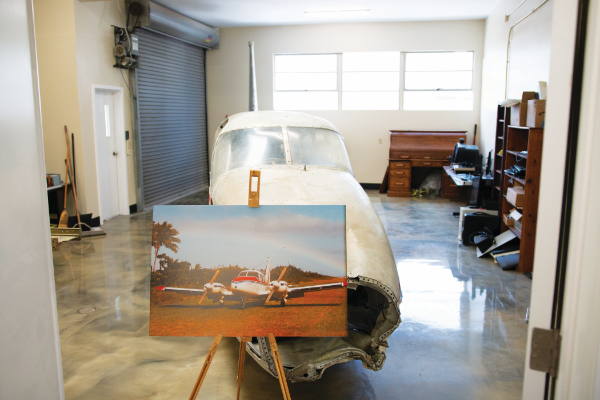
Pacific Union College recently introduced the Adventist Aviation Museum, showcasing Adventist missionary and aviation history to the campus and community.
This modern-day exhibition located across from Fisher Hall honors Adventist missionaries and aviation pioneers while offering ample space for students in the fast-growing program.
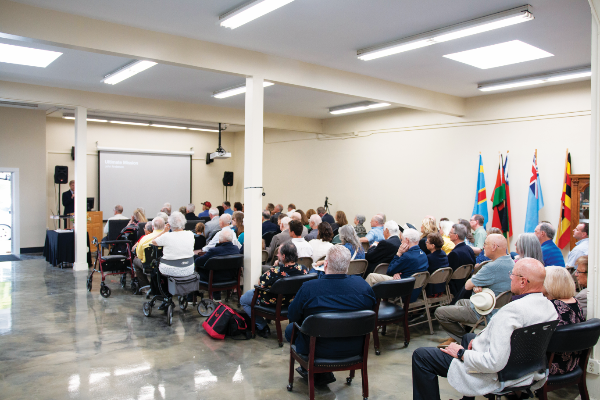
During the 2026 Homecoming Weekend, approximately 150 people attended the opening program, titled “Carrying on the Legacy: Conversations with Adventist Aviation Pioneers.” Attendees heard from Adventist mission pilots who had served in places such as Papua New Guinea, Tanzania, Kenya, and the Solomon Islands and were exposed to a broader picture of past work and a passion for keeping the mission moving forward.
“Seventh-day Adventists have always been a people of hope,” said PUC Flight Center Director Nathan Tasker in the museum’s promotional video. For Tasker, a key goal was to highlight the Adventist mission service that reached remote places—first by foot, then by air. The museum is in the early stages of development, with the purpose of sharing these accounts and honoring missionaries who served remote communities accessible only by air.
An important part of PUC’s focus on Adventist aviation history is the acquisition of Charlie, added to the fleet in January. This Cessna 206 had a large cargo capacity and supported the Flying Doctor program, which provided healthcare and education in addition to carrying church workers, Bibles, and building materials in Papua New Guinea, Australia, and Vanuatu. Thousands of lives were saved through Charlie’s service, and many more were touched by the work of the Holy Spirit.
Also to be featured in the museum is a Piper Aztec known as the J.L. Tucker. Named after the founder of The Quiet Hour, which donated more than 50 aircraft to serve the Adventist church worldwide, the J.L. Tucker was the first twin-engine aircraft to serve the Seventh-day Adventist Church. It provided safe, reliable transportation throughout the South Pacific. It will be displayed in the museum after its refurbishment.
Each artifact in the new museum is an important piece of history that represents incredible sacrifice. Janelle Alder, a missionary flight nurse in the Philippines, went missing in 2023. Her shoes are now housed in the museum, a silent witness to the personal cost of service. Other artifacts include items from Bob Roberts, Gary Roberts, and Jim Arrabito—missionaries who lost their lives, but whose influence remains with those they served.
“Our pilots have been the hands and feet of Jesus, serving as a lifeline to those whom the rest of the world has forgotten,” said Tasker. “As we celebrate these millions of miles, we must look at the tail numbers and flight logs and realize that it came with a cost. Every miracle flight has been underwritten by a legacy of sacrifice. To fly for the gospel is to step into a realm where the risks are as real as the rewards.”
Today, air service is often one of the only ways to reach people in more remote areas of the world. PUC’s Adventist Aviation Museum reminds the next generation of the sacrifices of the past and inspires them to follow God’s call to service, no matter the cost.
____________________
By Marina Maher
PUC inaugura el Adventist Aviation Museum en nuevas instalaciones
Pacific Union College inauguró recientemente el Adventist Aviation Museum, que presenta a la comunidad universitaria y al público la historia de la aviación y la obra misionera adventistas.
Esa moderna exposición, ubicada frente a Fisher Hall, rinde homenaje a los misioneros adventistas y a los pioneros de la aviación, a la vez que ofrece amplio espacio para los estudiantes de ese programa en rápido crecimiento.
Durante el Homecoming Weekend de 2026, aproximadamente 150 personas asistieron al programa inaugural, titulado «Continuar el legado: conversaciones con pioneros de la aviación adventista». Los asistentes escucharon a pilotos de misiones adventistas que habían servido en lugares como Papúa Nueva Guinea, Tanzania, Kenia y las Islas Salomón. Así pudieron conocer un panorama más amplio de la labor realizada en el pasado y el entusiasmo por dar continuidad a la misión.
«Los adventistas del séptimo día siempre hemos sido un pueblo de esperanza», dijo Nathan Tasker, director del PUC Flight Center, en el video promocional del museo. Para Tasker, uno de los objetivos principales era destacar el servicio misionero adventista que llegó a lugares remotos: primero a pie y después por aire. El museo se encuentra en sus primeras etapas de desarrollo y tiene el propósito de compartir esos relatos y honrar a los misioneros que sirvieron a comunidades remotas a las que solo se podía llegar por aire.
Una parte importante del interés de PUC por la historia de la aviación adventista es la adquisición de Charlie, incorporado a la flota en enero. Ese Cessna 206 contaba con gran capacidad de carga y apoyó el programa Flying Doctor, que brindaba atención médica y educación, además de transportar obreros de la iglesia, Biblias y materiales de construcción en Papúa Nueva Guinea, Australia y Vanuatu. El servicio de Charlie salvó miles de vidas, y la obra del Espíritu Santo alcanzó a muchas más.
El museo también exhibirá un Piper Aztec conocido como el J. L. Tucker. La aeronave lleva el nombre del fundador de The Quiet Hour, organización que donó más de 50 aviones para servir a la Iglesia Adventista en todo el mundo. El J. L. Tucker fue el primer avión bimotor al servicio de la Iglesia Adventista y proporcionó transporte seguro y confiable por todo el Pacífico Sur. Se exhibirá en el museo después de su restauración.
Cada objeto del nuevo museo es una importante pieza histórica que representa un sacrificio extraordinario. Janelle Alder, enfermera misionera de aviación en Filipinas, desapareció en 2023. Sus zapatos se conservan ahora en el museo como testimonio silencioso del costo personal del servicio. Entre los demás objetos se encuentran pertenencias de Bob Roberts, Gary Roberts y Jim Arrabito, misioneros que perdieron la vida, pero cuya influencia perdura entre aquellos a quienes sirvieron.
«Nuestros pilotos han sido las manos y los pies de Jesús y han servido como un medio vital para quienes el resto del mundo ha olvidado —dijo Tasker—. Al celebrar esos millones de millas, debemos mirar los números de matrícula y los registros de vuelo y comprender que tuvieron un costo. Detrás de cada vuelo milagroso existe un legado de sacrificio. Volar por el evangelio significa entrar en un ámbito donde los riesgos son tan reales como las recompensas».
En la actualidad, el transporte aéreo suele ser una de las únicas maneras de llegar a las personas que viven en las regiones más remotas del mundo. El Adventist Aviation Museum de PUC recuerda a la próxima generación los sacrificios del pasado y la inspira a seguir el llamado de Dios al servicio, sin importar el costo.
____________________
Por Marina Maher