
During Cancer Treatment
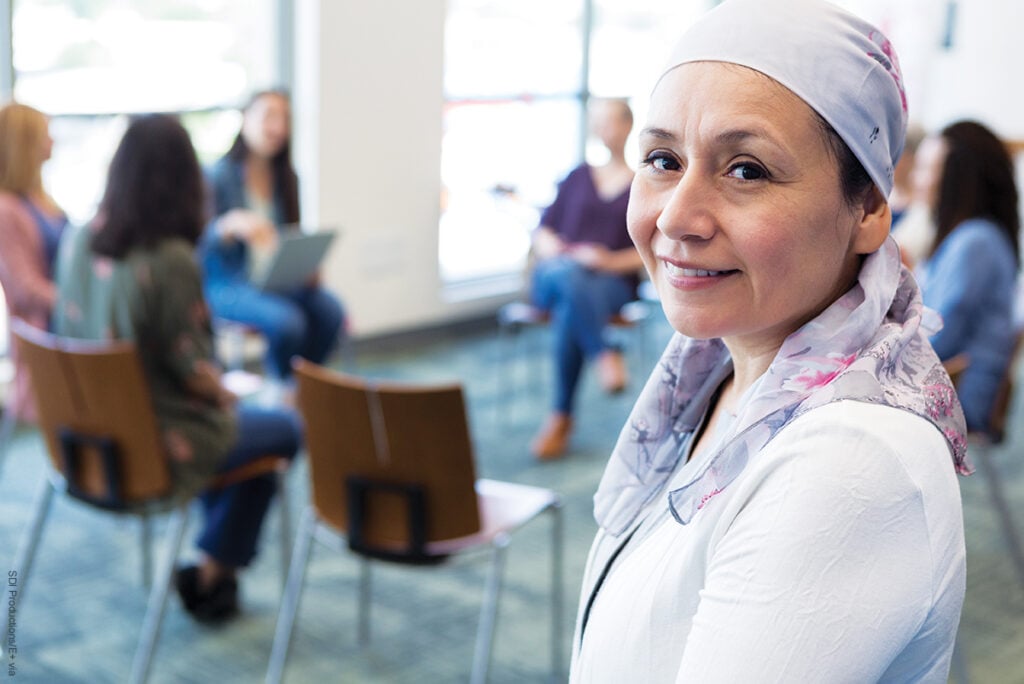
A Cancer Support Group for Spanish-speaking patients and their families at the Adventist Health Bakersfield Cancer Center is helping participants feel less isolated and more supported as they navigate illness.
The group has grown from what started as a simple monthly meeting to become a robust community gathering twice a month to provide emotional, spiritual, and practical care for one another.
Staff Chaplain Elsy Quiroga said that serving as chaplain for the group has become one of the most meaningful expressions of her pastoral ministry. “Over time, I have witnessed something remarkable: individuals who are facing life-threatening illness coming together to support one another with compassion, courage, and faith,” Elsy said.
The group is organized and led by the Cancer Center Social Work team, which plans topics for discussion at each meeting, such as the importance of healthy emotions, understanding grief, and accessing available resources.
“In our gatherings, every patient is recognized as unique, valuable, and worthy of being heard,” Elsy said. “Patients often share deeply personal experiences, fears, and hopes in an environment of empathy and understanding.”
This sense of community can help participants feel less isolated and more supported as they navigate the challenges of illness. Elsy recalled visiting a patient one day in the hospital and recognizing her as one of the regular participants in the Cancer Support Group.
“She spoke honestly about her desire to continue living and about how metastatic cancer had slowly taken much of her strength,” Elsy said. “Yet what impacted me most was her peaceful smile. She radiated hope and faith. She shared that although she understood her life might be coming to an end, God’s presence had become her greatest source of strength. She shared how deeply supported she felt through the Cancer Support Group, which had become like a family during her illness. Witnessing her faith and resilience reminded me how spiritual care can nurture hope even in the midst of suffering.”
Many patients in the group experience financial hardship, including food insecurity. When one couple in the group became aware of other group members who didn’t have enough food, they began bringing food baskets to give away at the meetings. Their generosity grew beyond the support group when organizers invited several group members to distribute food to people in need. “Through this process, patients receiving cancer care became agents of compassion, transforming their own suffering into service for others,” Elsy said.
Each year the care team also hosts a gala dinner, supported by community sponsors, where cancer patients celebrate life together. “It is a night when illness does not define them,” said Elsy. “Instead, we celebrate and honor life, gratitude, and resilience.”
This ministry illustrates how spiritual care in a healthcare setting can extend beyond individual patient visits to cultivate community. “These support group gatherings have become a place where patients, family members, and staff experience dignity, connection, and spiritual peace even in the midst of profound vulnerability,” Elsy said.
The support group has become a sacred space where patients feel safe showing vulnerability because they trust one another. It is a space where patients can feel calm and relaxed, prepared to face the next step in their cancer journey.
____________________
By Kim Strobel
Menos aislamiento, más apoyo durante el tratamiento del cáncer
Un Grupo de Apoyo al Cáncer para pacientes hispanohablantes y sus familias en Adventist Health Bakersfield Cancer Center está ayudando a los participantes a sentirse menos aislados y más apoyados mientras afrontan la enfermedad.
El grupo ha crecido desde lo que comenzó como una simple reunión mensual hasta convertirse en una reunión sólida dos veces al mes para ofrecer atención emocional, espiritual y práctica.
La capellana Elsy Quiroga dijo que servir como capellana del grupo se ha convertido en una de las expresiones más significativas de su ministerio pastoral. “Con el tiempo, he sido testigo de algo extraordinario: personas que enfrentan enfermedades que ponen en peligro su vida uniéndose para apoyarse mutuamente con compasión, valor y fe”, dijo Elsy.
El grupo está organizado y dirigido por el equipo de Trabajo Social del Centro Oncológico, que planifica temas para debatir en cada reunión, como la importancia de las emociones saludables, la comprensión del duelo y el acceso a los recursos disponibles.
“En nuestras reuniones, cada paciente es reconocido como único, valioso y digno de ser escuchado”, dijo Elsy. “Los pacientes suelen compartir experiencias profundamente personales, temores y esperanzas en un ambiente de empatía y comprensión.”
Ese sentido de comunidad puede ayudar a los participantes a sentirse menos aislados y más apoyados mientras afrontan los desafíos de la enfermedad. Elsy recordó haber visitado a una paciente un día en el hospital y reconocerla como una de las participantes habituales del Grupo de Apoyo al Cáncer.
“Habló con sinceridad sobre su deseo de seguir viviendo y sobre cómo el cáncer metastásico le había ido quitando poco a poco gran parte de la fuerza”, dijo Elsy. “Pero lo que más me impactó fue su sonrisa pacífica. Irradiaba esperanza y fe. Compartió que, aunque entendía que su vida podría estar llegando a su fin, la presencia de Dios se había convertido en su mayor fuente de fortaleza. Compartió lo profundamente apoyada que se sentía a través del Grupo de Apoyo al Cáncer, que se había convertido en una familia durante su enfermedad. Ver su fe y resiliencia me recordó cómo el cuidado espiritual puede fomentar la esperanza incluso en medio del sufrimiento.”
Muchos pacientes del grupo experimentan dificultades económicas, incluida la inseguridad alimentaria. Cuando una pareja del grupo se dio cuenta de que otros miembros no tenían suficiente comida, empezó a traer cestas de comida para regalar en las reuniones. Su generosidad fue más allá del grupo de apoyo cuando los organizadores invitaron a varios miembros del grupo a repartir comida a personas necesitadas. “A través de ese proceso, los pacientes que reciben atención oncológica se convirtieron en agentes de compasión, transformando su sufrimiento en servicio para los demás”, dijo Elsy.
Cada año, el equipo también organiza una cena de gala, apoyada por patrocinadores comunitarios, donde los pacientes celebran la vida juntos. “Es una noche en la que la enfermedad no los define”, dijo Elsy. “Celebramos y honramos la vida, la gratitud y la resiliencia.”
Ese ministerio ilustra cómo la atención espiritual en un entorno sanitario puede ir más allá de las visitas individuales a pacientes para cultivar la comunidad. “Esas reuniones de grupos de apoyo se han convertido en un lugar donde pacientes, familiares y personal experimentan dignidad, conexión y paz espiritual incluso en medio de una vulnerabilidad profunda”, dijo Elsy.
El grupo de apoyo se ha convertido en un espacio sagrado donde los pacientes se sienten seguros mostrando vulnerabilidad porque confían unos en otros. Es un espacio donde los pacientes pueden sentirse tranquilos y relajados, preparados para afrontar el siguiente paso en su camino contra el cáncer.
____________________
Por Kim Strobel