
Adventist Pioneers in the West
In Part 1, concentrating on elementary schools and academies, we looked at the development of Adventist education from very small beginnings to becoming a major worldwide program. Now we turn to higher education in the West and the three major institutions.
Loma Linda University
Probably the most dramatic story involves the founding of what was to become Loma Linda University. Ellen White played a central role in establishing this vital educational institution and securing the property. She saw the importance of combining theological education with practical skills, especially those to do with health and medicine. She spoke of “medical evangelism” and recognized how spiritual health and physical health could be combined in a way to represent the truth of the gospel, just as Jesus did.
Ellen White searched for a place where this could happen. She wrote, “On our way back to Redlands, as our train passed through miles of orange groves, I thought of the efforts that should be made in this beautiful valley to proclaim the truth for this time.… The cause of God is to make more rapid advancement in southern California than it has in the past.”1
The person she assigned to search, John Burden, discovered Loma Linda, then known as Mound City. He wrote to Ellen White, who was attending the 1905 General Conference session back East, recommending purchase. She noted at the time, “As I read his letter, I was impressed that this was one of the places I had seen in vision.”2
The problem was the steep asking price: $110,000. But the property investors involved wanted to dispose quickly of their failed project, so they kept dropping the price, eventually down to $40,000. With the encouragement of Ellen White, Burden planned to proceed with the purchase. Before he could do so, however, he received a telegram from church headquarters ordering him not to buy it. When Ellen White heard this, she had a telegram sent to Burden, together with a follow-up letter that said:
“Your letter has just been read. I had no sooner finished reading it than I said, ‘I will consult no one; for I have no question at all about the matter.’ I advised Willie to send you a telegram without spending time to ask the advice of the brethren. Secure the property by all means, so that it can be held.”3 Burden followed Ellen White’s instructions, not listening to the objections of the brethren. Despite a number of challenges, the property was secured.
But this was just the beginning. Ellen White wrote: “With the possession of this place comes the weighty responsibility of making the work of the institution educational in character. Loma Linda is to be not only a sanitarium, but an educational center. A school is to be established here for the training of gospel medical missionary evangelists.”4
Mound City was to be transformed into Ellen White’s vision of what Loma Linda could become. In what was a new educational venture for the denomination, “The medical school at Loma Linda is to be of the highest order, because we have a living connection with the wisest of all physicians, from whom there is communicated knowledge of a superior order. And whatever subjects are required as essential in the schools conducted by those not of our faith, we are to supply, so that our youth need not go to these worldly schools.”5
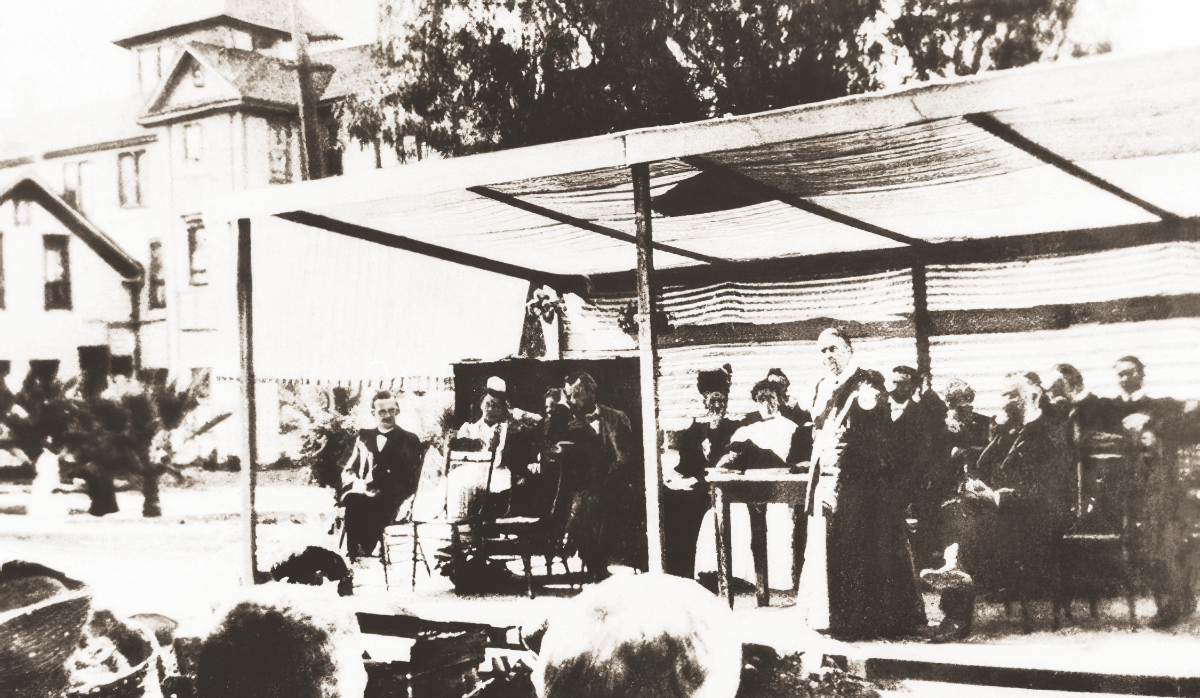
The results were spectacular. Loma Linda Sanitarium was dedicated in April 1906, with the College of Evangelists opening in September of the same year. The first commencement service was held for seven nurses in July 1907. By 1909, the College of Medical Evangelists was granted its charter of incorporation from the state. In 1910, Ellen White made it clear that this was to be a professional medical school, something the denomination had never done before.
In 1918 the college had so advanced in its training and expertise that it received a “B” rating from the Council on Medical Education. This became an “A” rating in 1922. It was accredited by the Northwest Association of Secondary and Higher Schools in 1937, and then by the Western Association of Schools and Colleges in 1960. Today around 4,500 students attend Loma Linda University annually, and it is recognized as a world-class educational institution.
La Sierra University
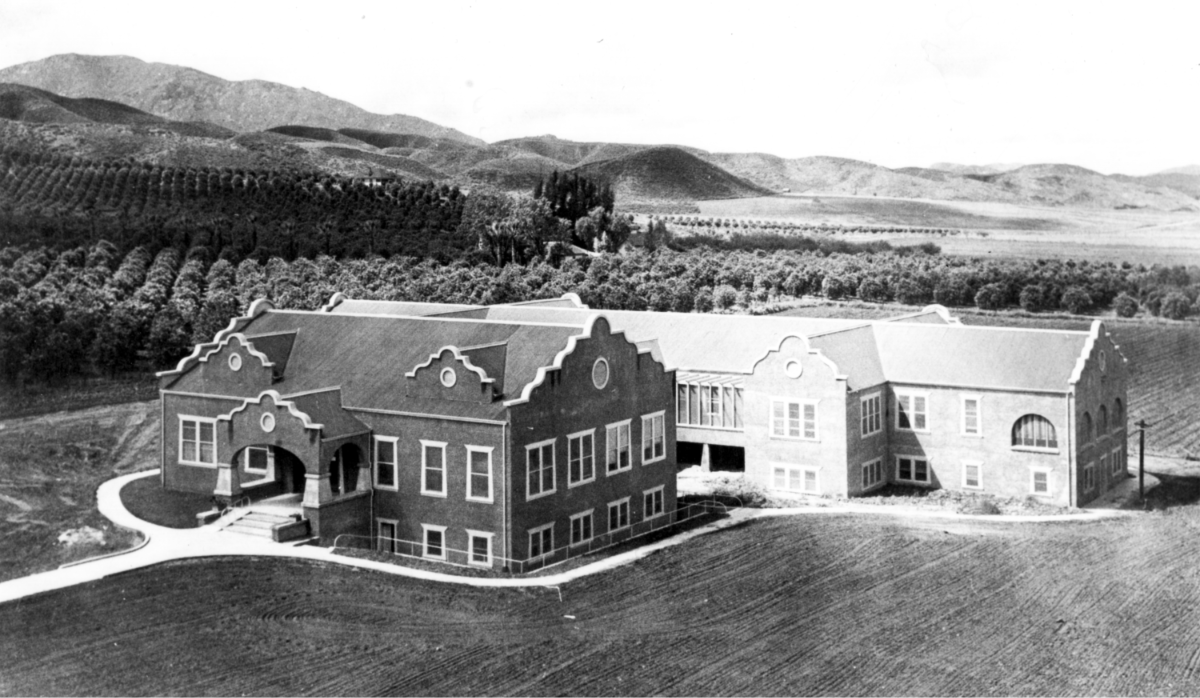
The reorganization of the California Conference in 1915 that created the Southeastern California Conference resulted in a conference that did not have an academy. Since the conference administration was committed to education, they began looking for a property on which to build. In 1922, they eventually settled on a location near Riverside called Rancho La Sierra, which had originally been part of an 1846 Mexican land grant.
The new principal, J.J. Robison, bravely announced on July 1, 1922, that the school would open on October 3. At that stage there was nothing there!
He later explained, “We did not have a building. We did not have a book in our library, nor a test tube for the laboratory. We did not have a desk or a chair. We did not even have a faculty.… But we did have faith.… And so with faith and courage and loyal cooperation and united effort we stepped forward, facing every difficulty, confident that the Lord was leading, and that we would open school on October 3, as we had advertised.”6
The school opened on time, even though not quite finished. The girls’ dormitory was only half plastered—and since the stairs had not been installed, the girls had to access their unfinished rooms by ladder!
In a report on the inaugural reception in 1922, Varner Johns concluded, “Every lover of Christian education should have heard one of the students tell those assembled, why she came to La Sierra Academy. All our efforts and sacrifices are worth while, if only our boys and girls can be in a school where such a spirit grips the hearts of its students. They have caught the spirit of the message, and they too have the ‘vision’ of true education and of service in a world field.”7
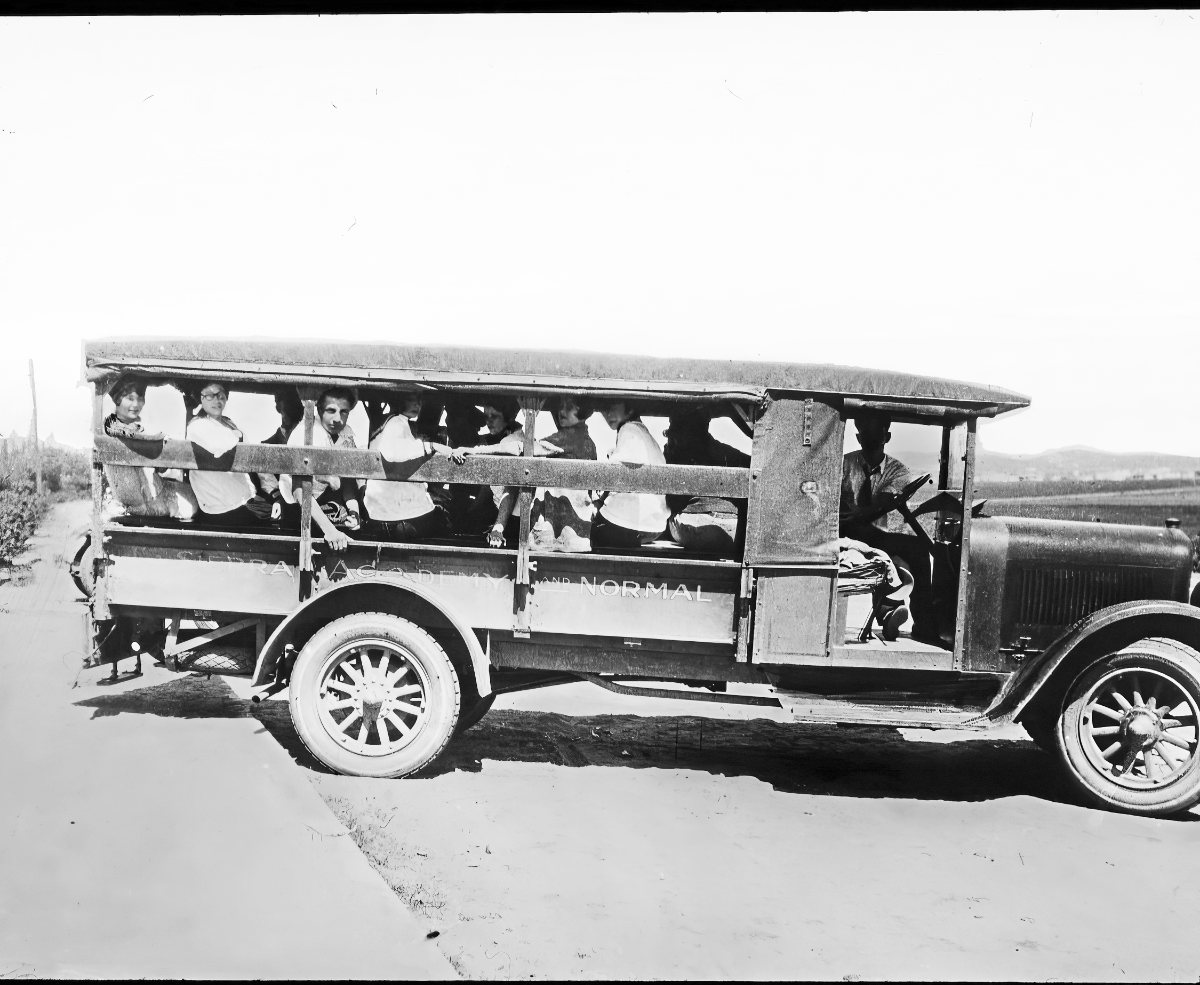
In 1923, coursework for teacher training was added, and the school became La Sierra Academy and Normal School. With additional courses, in 1927 the name changed to Southern California Junior College. This necessitated major expansion to the institution, including extra office space, laboratory equipment, heating facilities, and library development. An elementary school was built on the north side of the campus. Over the next three years, other facilities were added and the industrial program of the college was improved.
A new science hall was added in 1932, which led to the accreditation of the college by the Northwest Association of Colleges and Secondary Schools in 1933. A swimming pool, a camp meeting auditorium, and the Hole Memorial Auditorium were constructed between 1935 and 1937.
In 1939, the name changed to La Sierra College, and it was accredited as a four-year liberal arts college in 1946. After the war, enrollment increased rapidly, reaching 919 in the winter term of 1947-1948.
In 1967, it was decided to merge La Sierra College with Loma Linda University as the latter’s College of Arts and Sciences. However, in 1990 this arrangement was ended, and La Sierra University and Loma Linda University were reconstituted as separate institutions.
The university is accredited by the Western Association of Schools and Colleges and the North American Division Commission on Accreditation of the Board of Regents of the General Conference of Seventh-day Adventists.
Beyond the academic aspects, the real reason behind all Adventist schools is to “educate for eternity.” As Ellen White wrote: “God would not have us in any sense behind in educational work. Our colleges should be far in advance in the highest kind of education.… There is a great deal of talk concerning higher education, and many suppose that higher education consists wholly in an education in science and literature; but this is not all.… The highest class of education is that which will give such knowledge and discipline as will lead to the best development of character, and will fit the soul for that life which measures with the life of God. Eternity is not to be lost out of our reckoning. The highest education is that which will teach our children and youth the science of Christianity, which will give them an experimental knowledge of God’s ways, and will impart to them the lessons that Christ gave to His disciples, of the paternal character of God.”8
Today approximately 2,500 students attend La Sierra University each year. It has over 60 undergraduate and over 20 graduate programs in a wide range of subjects.
Pacific Union College
Pacific Union College began as Healdsburg College, the school begun by Sidney Brownsberger in 1882 with just 28 students. A report in the Signs of the Times gives the background:
“When it was voted at the Sacramento camp-meeting last year, to make an effort to start a school in California, no one imagined that so much could be accomplished in one year, nor would it have been believed if it had been predicted. No other important enterprise among Seventh-day Adventists has been so rapidly forwarded to a successful standing, and with so small an outlay of means compared to results. Bro. W.C. White has spent several weeks in Healdsburg, to aid in the work. There seems to be a general feeling among our people that the shortness of time demands that the College be placed in the highest state of usefulness in the shortest possible time. All consider that it has a mission to prepare laborers for various positions in the cause of the present truth, and all seem to realize that there is no time to be lost.”9
It was not many years before larger premises were required. A new location had to be found, and a resort property at Angwin was investigated. Ellen White was taken there to review it, and she reported:
“As I have looked over this property I pronounce it to be superior in many respects. The school could not be located in a better spot. It is eight miles from St. Helena, and is free from city temptations.… We realize that the Lord knew what we needed and that it is His providence that brought us here.… God wanted us here and He has placed us here. I was sure of this as I came on these grounds.… I believe that as you walk through these grounds you will come to the same decision—that the Lord designed this place for us.”10
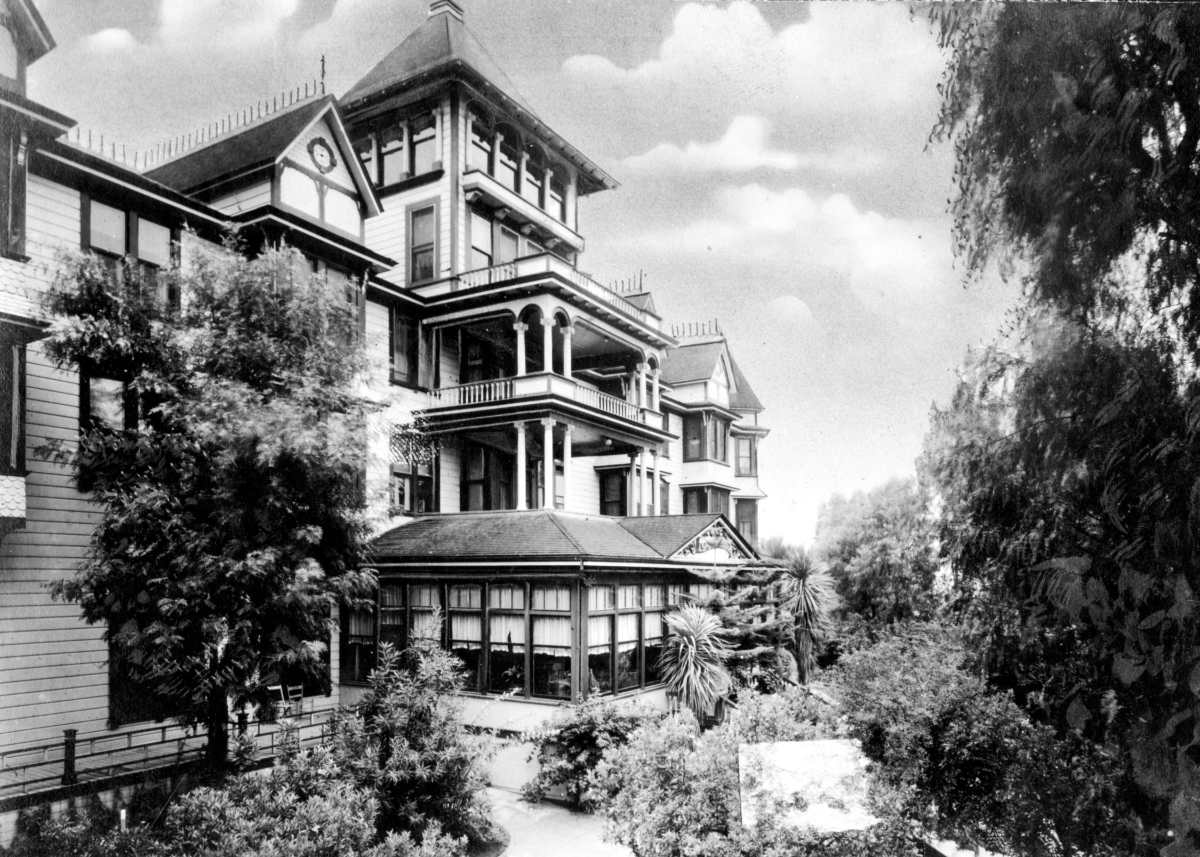
As a result, in 1909 the church bought the Angwin Resort in the mountains above St. Helena at a cost of $60,000. Pacific Union College was dedicated on Sept. 29, 1909. The resort’s hotel, bowling alleys, and cottages were converted into dormitories, classrooms, and faculty homes, while other buildings were constructed using the timber available on the property.
But the most significance aspect was the spiritual plan. The college was created to provide both philosophical and practical instruction for the church’s young people across a wide spread of vocations, with the spiritual component of prime importance.
Ellen White commented: “Now we need not wait any longer; our school can assemble and the work begin at once. And at its very beginning, let us determine to walk humbly with God. Let us seek to make such a representation as is given to us in the words I have read to you today. If we will do this—if we will walk in God’s ways and keep His charge—the light of Heaven will certainly shine upon us. If we will resolve to do our best here, exercising the physical muscles equally with the brain powers, if we will work for the harmonious development of all the powers of the being, the blessing of the Lord will rest upon us in large measure.”11
She even referenced the long uphill road to Angwin, stating that “It is true that there is a long hill to climb in order to reach the place, but that is not altogether a disadvantage. Many of us would be greatly benefited in muscle and in sinew if we did more climbing of hills.”12
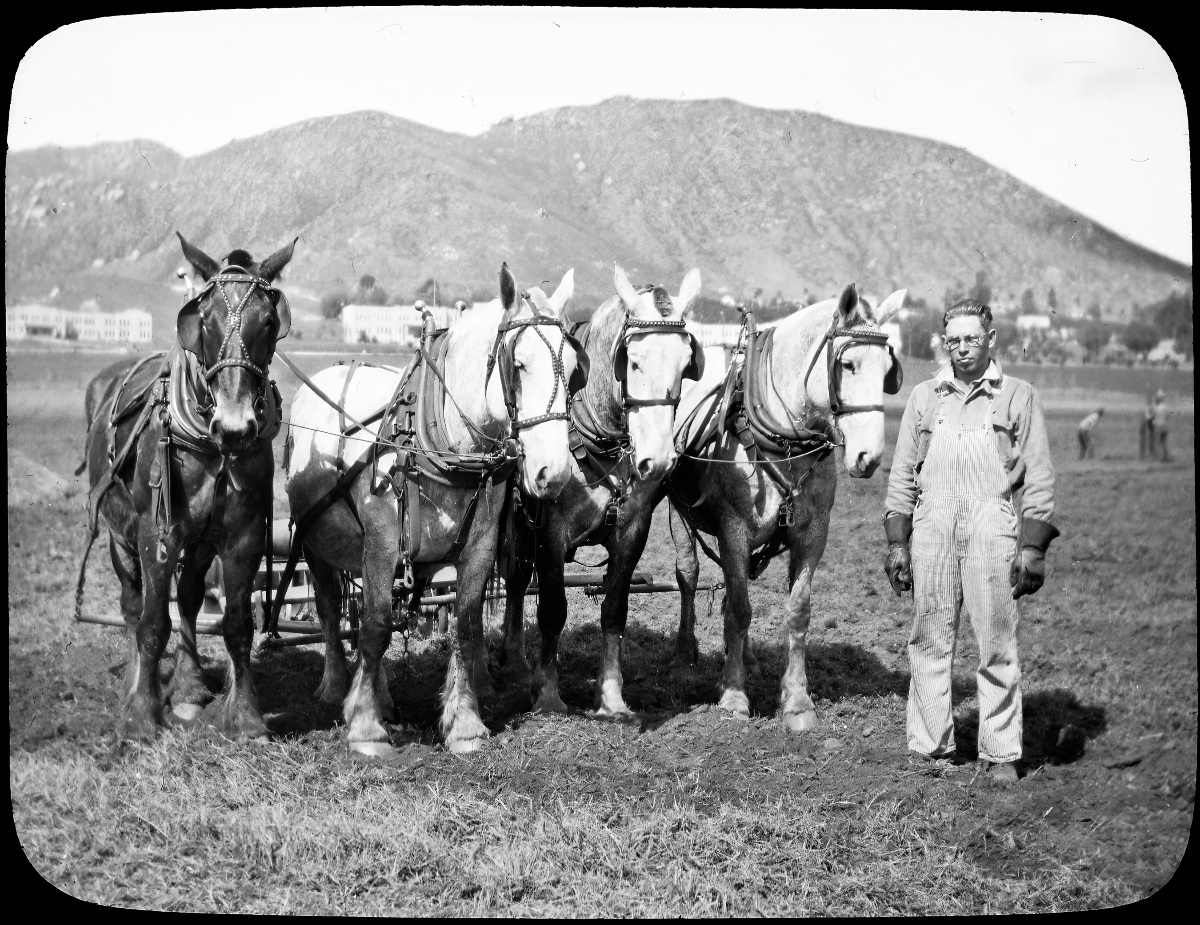
The college not only provided “normal” education but also helped develop practical skills by at one time hosting a dairy farm and a poultry farm, as well as providing blacksmithing and home economics. Later courses included aviation classes, film and television courses, and other contemporary fields of study. For an extensive narrative of the history, refer to Walter Utt’s book, A Mountain, a Pickax, a College.13
The college has gained accreditation from the relevant organizations and has progressed with the development of higher education. For example, graduate work began in 1934 with a very successful summer program called the Advanced Bible School. This became the start of a high-level Bible program that eventually became the Adventist Theological Seminary.
Pacific Union College has a current enrollment of 1,080, comprised of 1,035 undergraduates and 45 in the graduate program.
The West has played a major role in the development of Adventist education. From the work of one-room teacher Alma McKibbin in California—who wrote the early textbooks that were used in Adventist schools for 50 years—to the extensive network of schools across the Pacific Union, from the early days of small school classes to the major enrollment in the large educational institutions, this is the result of believing in Adventist education here in the Pacific Southwest.
_____________________________
1Ellen G. White, “Notes of Travel—No. 7,” Review and Herald, April 6, 1905, p. 8.
2Ellen G. White, Life Sketches of Ellen G. White (Mountain View, CA: Pacific Press Pub. Assn, 1915), p. 405.
3Ellen G. White, Progress of Work at Loma Linda, p. 2, https://egwwritings.org/book/b291.
4White, Life Sketches, p. 406.
5Ellen G. White, Loma Linda Messages, p. 487, https://egwwritings.org/book/b433.
6“92 Years Ago,” Adventist World, July 12, 2014, p. 30.
7Varner J. Johns, “La Sierra Academy Reception,” Pacific Union Recorder, Nov. 30, 1922, p. 4.
8Ellen G. White, Counsels to Parents, Teachers, and Students (Mountain View, CA: Pacific Press Pub. Assn., 1913), p. 45.
9“California Camp-Meeting,” Signs of the Times, Oct. 26, 1882, p. 474.
10Ellen G. White, Last Day Events (Boise, ID: Pacific Press Pub. Assn., 1992), p. 108.
11“Report of the Dedicatory Exercises of Pacific College,” Pacific Union Recorder, Oct. 7, 1909, pp. 5-6.
12Ellen G. White, “Educational Advantages of the Angwin Property,” Pacific Union Recorder, Sept. 23, 1909, p. 4.
Pioneros adventistas en el oeste De pequeñas aulas a convertirse en el mayor sistema educativo protestante parte 2
Por el personal del Recorder
En la 1ª Parte, centrándonos en escuelas primarias y academias, analizamos el desarrollo de la educación adventista desde unos comienzos muy pequeños hasta convertirse en un programa mundial de gran relevancia. Ahora nos centramos en la educación superior en oesta y en las tres instituciones principales.
Loma Linda University
Probablemente la historia más dramática gira en torno a la fundación de lo que sería Loma Linda University. Ellen White desempeñó un papel central en la creación de esa vital institución educativa y en la obtención de la propiedad. Consideró la importancia de combinar la educación teológica con habilidades prácticas, especialmente las relacionadas con la salud y la medicina. Habló de «evangelización médica» y reconoció cómo la salud espiritual y la salud física podían combinarse para representar la verdad del evangelio, tal como lo hizo Jesús.
Ellen White buscó un lugar donde eso pudiera ocurrir. Escribió: «En camino de regreso a Redlands, mientras nuestro tren pasaba por kilómetros de naranjales, pensé en los esfuerzos que se debían hacer en ese hermoso valle para proclamar la verdad por esta época…. La causa de Dios es lograr un avance más rápido en el sur de California que en el pasado».1
La persona a la que asignó la búsqueda, John Burden, descubrió Loma Linda, entonces conocida como Mound City. Escribió a Ellen White, que asistía a la sesión de la Conferencia General de 1905, recomendando su compra. En ese momento la Sra. White comentó: «Al leer su carta, me impresionó que ese fuera uno de los lugares que había visto en visión».2
El problema era el precio: 110.000 dólares. Pero los inversores inmobiliarios querían deshacerse rápidamente de su proyecto fallido, así que siguieron bajando el precio, hasta llegar finalmente a 40.000 dólares. Con el apoyo de Ellen White, Burden planeó seguir adelante con la compra. Sin embargo, antes de que pudiera hacerlo, recibió un telegrama de la sede de la iglesia ordenándole no comprarlo. Cuando Ellen White se enteró, le envió un telegrama a Burden, junto con una carta de seguimiento que decía:
«Acabo de leer su carta. Apenas terminé de leerla cuando pensé: “No consultaré a nadie; pues no tengo ninguna duda al respecto”. Aconsejé a Willie que le enviara un telegrama sin perder tiempo pidiendo consejo a los hermanos. Asegure la propiedad por todos los medios para que pueda ser obtenida».3 Burden siguió las instrucciones de Ellen White, sin escuchar las objeciones de los hermanos. A pesar de varios desafíos, la propiedad fue obtenida.
Pero eso fue solo el principio. Ellen White escribió: «Con la posesión de ese lugar viene la pesada responsabilidad de hacer que el trabajo de la institución sea educativo y de carácter. Loma Linda no solo será un sanatorio, sino un centro educativo. Se va a establecer ahí una escuela para la formación de evangelistas misioneros médicos evangélicos».4
Mound City iba a transformarse en la visión de Ellen White sobre lo que Loma Linda podría llegar a ser. En lo que fue una nueva iniciativa educativa para la denominación, «la escuela de medicina de Loma Linda debe ser de la más alta categoría, porque tenemos una conexión viva con el más sabio de los médicos, de quien se comunica conocimiento de una orden superior. Las materias que se requieran como esenciales en las escuelas impartidas por quienes no son de nuestra fe, debemos proveerlas, para que nuestra juventud no tenga que acudir a estas escuelas del mundo».5
Los resultados fueron espectaculares. El Sanatorio Loma Linda fue dedicado en abril de 1906, y el College of Evangelists abrió en septiembre de ese mismo año. La primera ceremonia de graduación se celebró para siete enfermeras en julio de 1907. En 1909, el College of Medical Evangelists recibió su carta de incorporación por parte del estado. En 1910, Ellen White dejó claro que esa sería una escuela de medicina profesional, algo que la denominación nunca había hecho antes.
En 1918, el colegio había avanzado tanto en su formación y experiencia que recibió una calificación «B» del Council on Medical Education. Se convirtió en una calificación «A» en 1922. Fue acreditada por la Northwest Association of Secondary and Higher Schools en 1937, y posteriormente por la Western Association of Schools and Colleges en 1960. Hoy en día, alrededor de 4.500 estudiantes asisten anualmente a Loma Linda University, y está reconocida como una institución educativa de primer nivel.
La Sierra University
La reorganización de la California Conference en 1915, que creó la Southeastern California Conference, dio lugar a una conferencia que no contaba con una academia. Como la administración de la conferencia estaba comprometida con la educación, comenzaron a buscar una propiedad para construir. En 1922, finalmente se establecieron en un lugar cerca de Riverside llamado Rancho La Sierra, que originalmente formaba parte de una concesión de tierra mexicana de 1846.
El nuevo director, J.J. Robison, anunció valientemente el 1 de julio de 1922 que la escuela abriría el 3 de octubre. ¡En ese momento no había nada!
Más tarde explicó: «No teníamos un edificio. No teníamos un libro en nuestra biblioteca, ni un tubo de ensayo para el laboratorio. No teníamos escritorios ni sillas. Ni siquiera teníamos profesorado…. Pero sí teníamos fe…. Así que, con fe, valor, cooperación leal y esfuerzo unido, dimos un paso adelante, enfrentando cada dificultad, confiados en que el Señor lideraba, y que abriríamos la escuela el 3 de octubre, como habíamos anunciado».6
La escuela abrió a tiempo, aunque aún no estaba del todo terminada. El dormitorio de señoritas solo estaba medio enyesado y como las escaleras no se habían instalado, las chicas tenían que acceder a sus habitaciones sin terminar por una escalera.
En un informe sobre la recepción inaugural en 1922, Varner Johns concluyó: «Todo amante de la educación cristiana debería haber escuchado a uno de los estudiantes decir a los presentes por qué vino a La Sierra Academy. Todos nuestros esfuerzos y sacrificios valen la pena, si tan solo nuestros jóvenes pueden estar en una escuela donde ese espíritu se aferre al corazón de sus estudiantes. Han captado el espíritu del mensaje y también tienen la “visión” de una verdadera educación y del servicio en un ámbito mundial».7
En 1923 se añadieron cursos para la formación de profesores y la escuela pasó a llamarse La Sierra Academy and Normal School. Con cursos adicionales, en 1927 el nombre cambió a Southern California Junior College. Eso requirió una gran expansión en la institución, incluyendo más espacio de oficinas, equipos de laboratorio, instalaciones de calefacción y desarrollo de una biblioteca. Se construyó una escuela primaria en el lado norte del campus. Durante los tres años siguientes se añadieron otras instalaciones y se mejoró el programa industrial de la academia.
En 1932 se añadió un nuevo pabellón de ciencias, lo que llevó a su acreditación por parte de la Northwest Association of Colleges and Secondary Schools en 1933. Entre 1935 y 1937 se construyeron una piscina, un auditorio para reuniones del campestre y el Hole Memorial Auditorium.
En 1939, el nombre cambió a La Sierra College, y fue acreditado como una universidad de artes liberales de cuatro años en 1946. Tras la guerra, la matrícula aumentó rápidamente, alcanzando los 919 en el trimestre de invierno de 1947-1948.
En 1967, se decidió fusionar a La Sierra College con Loma Linda University para formar la Facultad de Artes y Ciencias de esa última. Sin embargo, en 1990 ese acuerdo terminó y La Sierra University y Loma Linda University se reconstituyeron como instituciones separadas.
La universidad está acreditada por la Western Association of Schools and Colleges y por la Comisión de Acreditación de la División de Norteamérica de la Junta de Regentes de la Conferencia General de Adventistas del Séptimo Día.
Más allá de los aspectos académicos, la verdadera razón detrás de todas las escuelas adventistas es «educar para la eternidad». Como escribió Ellen White: «Dios no quiere que nos retrasemos en ningún sentido en el trabajo educativo. Nuestras universidades deberían estar muy adelantadas en el más alto tipo de educación…. Se habla mucho sobre la educación superior y muchos suponen que la educación superior consiste íntegramente en una educación en ciencias y literatura; pero eso no es todo…. La clase más elevada de educación es aquella que aportará el conocimiento y la disciplina que conduzcan al mejor desarrollo de carácter y que capaciten el alma para esa vida que se mide con la vida de Dios. La eternidad no debe perderse de nuestros cálculos. La educación más elevada es aquella que enseñará a nuestros hijos y jóvenes la ciencia del cristianismo, que les dará un conocimiento experimental de los caminos de Dios y les transmitirá las lecciones que Cristo dio a sus discípulos, sobre el carácter paternal de Dios».8
Hoy en día, aproximadamente 2.500 estudiantes asisten a La Sierra Univesity cada año. Cuenta con más de 60 programas de licenciatura y más de 20 programas de posgrado en una amplia variedad de materias.
Pacific Union College
Pacific Union College comenzó como Healdsburg College, la escuela fundada por Sidney Brownsberger en 1882 con solo 28 estudiantes. Un informe en el Signs of the times da el contexto:
«Cuando se votó en el campestre de Sacramento el año pasado intentar fundar una escuela en California, nadie imaginó que se podría lograr tanto en solo un año, ni se habría creído si se hubiera predicho. Ninguna otra empresa importante entre los Adventistas del Séptimo Día ha sido impulsada tan rápidamente hacia el éxito y con un gasto tan pequeño en recursos en comparación con sus resultados. El hermano W.C. White ha pasado varias semanas en Healdsburg para ayudar en la obra. Parece haber una sensación general entre nuestra gente de que la escasez de tiempo exige que el colegio se coloque en el estado más alto de utilidad en el menor tiempo posible. Todos consideran que tienen como misión preparar a los obreros para diversos puestos en la causa de la verdad presente, y todos parecen darse cuenta de que no hay tiempo que perder».9
No pasaron muchos años antes de que se necesitaran locales más grandes. Había que encontrar una nueva ubicación y se investigó una propiedad turística en Angwin. Ellen White fue llevada allí para evaluarla y ella informó:
“Al examinar esta propiedad, la considero superior en muchos aspectos. La escuela no podría estar ubicada en un mejor lugar. Está a ocho millas de Santa Elena y está libre de las tentaciones de la ciudad…. Nos damos cuenta de que el Señor sabía lo que necesitábamos y que es su providencia la que nos trajo hasta aquí…. Dios quería que estuviéramos aquí y nos ha puesto aquí. Estaba segura de eso cuando vine por estos terrenos…. Creo que al caminar por estos terrenos llegarán a la misma decisión: que el Señor diseñó este lugar para nosotros».10
Como resultado, en 1909 la iglesia compró Angwin Resort en las montañas de Santa Elena por un costo de 60.000 dólares. Pacific Union College fue inaugurado el 29 de septiembre de 1909. El hotel, el boliche y las cabañas del complejo se convirtieron en dormitorios, aulas y viviendas para profesores, mientras que otros edificios se construyeron utilizando la madera disponible en la propiedad.
Pero el aspecto más importante era el plan espiritual. El colegio fue creado para ofrecer instrucción tanto filosófica como práctica a los jóvenes de la iglesia en una amplia variedad de vocaciones, siendo el componente espiritual de suma importancia.
Ellen White comentó: «Ahora ya no tenemos que esperar más; nuestra escuela puede reunirse y el trabajo empezar de inmediato. Y en su principio, decidamos caminar humildemente con Dios. Busquemos hacer una representación como la que se nos da en las palabras que les he leído hoy. Si hacemos eso, si caminamos en los senderos de Dios y mantenemos su encargo, la luz del Cielo sin duda brillará sobre nosotros. Si decidimos dar lo mejor de nosotros aquí, ejercitando los músculos físicos por igual que las capacidades cerebrales, si trabajamos para el desarrollo armonioso de todos los poderes de nuestro ser, la bendición del Señor recaerá sobre nosotros en gran medida».11
Incluso hizo referencia al largo camino ascendente hacia Angwin, afirmando: «Es cierto que hay una larga colina que subir para llegar al lugar, pero eso no es del todo una desventaja. Muchos de nosotros nos beneficiaríamos enormemente en músculo y tendón si subiéramos más colinas».12
El colegio no solo ofrecía educación «normal», sino que también ayudó a desarrollar habilidades prácticas al albergar en su momento una granja lechera y una granja avícola, además de ofrecer herrería y economía doméstica. Los cursos posteriores incluyeron clases de aviación, cine y televisión, y otros campos de estudio contemporáneos. Para una extensa narración de la historia, consulte el libro de Walter Utt, A Mountain, a Pickax, a College.13
El colegio ha obtenido la acreditación de las organizaciones correspondientes y ha avanzado en el desarrollo de la educación superior. Por ejemplo, los estudios de posgrado comenzaron en 1934 con un programa de verano muy exitoso llamado Advanced Bible School. Eso se convirtió en el inicio de un programa bíblico de alto nivel que finalmente se convirtió en el Adventist Theological Seminary.
Pacific Union College tiene actualmente 1.080 estudiantes matriculados, compuestos por 1.035 estudiantes de licenciatura y 45 en el programa de posgrado.
El oeste ha desempeñado un papel fundamental en el desarrollo de la educación adventista. Desde el trabajo de la profesora de una sola aula Alma McKibbin en California —que escribió los primeros libros de texto que se usaron en las escuelas adventistas durante 50 años— hasta la extensa red de escuelas en toda la Pacific Union, desde los primeros días de escuelas pequeñas hasta la amplia inscripción en las grandes instituciones educativas, eso es fruto de la creencia en la educación adventista en el suroeste del Pacífico.
_____________________________
1Ellen G. White, “Notes of Travel—No. 7,” Review and Herald, April 6, 1905, p. 8.
2Ellen G. White, Life Sketches of Ellen G. White (Mountain View, CA: Pacific Press Pub. Assn, 1915), p. 405.
3Ellen G. White, Progress of Work at Loma Linda, p. 2, https://egwwritings.org/book/b291.
4White, Life Sketches, p. 406.
5Ellen G. White, Loma Linda Messages, p. 487, https://egwwritings.org/book/b433.
6“92 Years Ago,” Adventist World, July 12, 2014, p. 30.
7Varner J. Johns, “La Sierra Academy Reception,” Pacific Union Recorder, Nov. 30, 1922, p. 4.
8Ellen G. White, Counsels to Parents, Teachers, and Students (Mountain View, CA: Pacific Press Pub. Assn., 1913), p. 45.
9“California Camp-Meeting,” Signs of the Times, Oct. 26, 1882, p. 474.
10Ellen G. White, Last Day Events (Boise, ID: Pacific Press Pub. Assn., 1992), p. 108.
11“Report of the Dedicatory Exercises of Pacific College,” Pacific Union Recorder, Oct. 7, 1909, pp. 5-6.
12Ellen G. White, “Educational Advantages of the Angwin Property,” Pacific Union Recorder, Sept. 23, 1909, p. 4.