
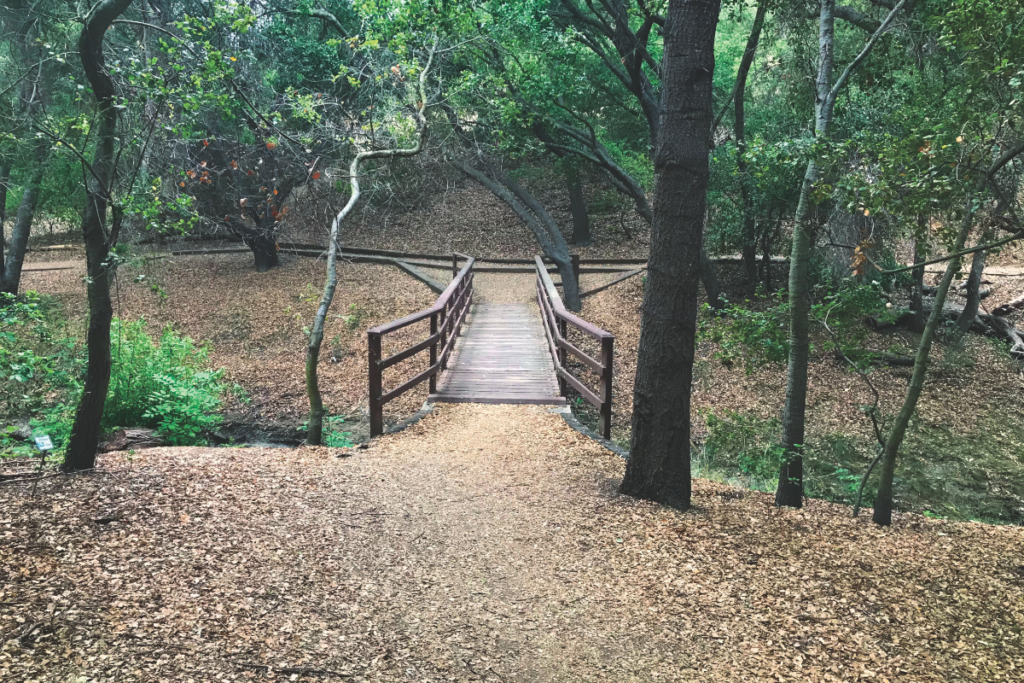
Every morning begins the same way for me: waking with anticipation, stepping outside, and walking toward a small hill behind the apartment complex. Nothing dramatic. No thunder. No voice from heaven. Just a walking stick taken in hand and a heart quietly hoping to discover what the day will reveal. The small hill is home to the Conejo Valley Botanical Garden, and its trails are walked daily by many, including me.
Scripture knows this rhythm well. “This is the day that the Lord has made; let us rejoice and be glad in it” (Psalm 118:24, ESV). Not the extraordinary day. Just the day. The one we wake into with stiff joints, lingering memories, and quiet hope. In many ways, this simple ritual becomes a parable of faith itself—faith not as conquest, but as return; not as certainty, but as grace received anew.
The hill is modest. It does not compare to the hills of my youth, climbed with strength, confidence, and perhaps a bit of bravado. This hill is different. It is climbed slowly, attentively, sometimes with fatigue, sometimes with sweat, always with awareness of limitation. And yet, it is precisely here—on this smaller hill—that something quietly theological unfolds.
The Bible places some very important events on various mountains. We find Moses receiving the ten commandments on Mount Sinai or Horeb (Exodus 19-24); the ark rests on Mount Ararat after the flood (Genesis 8:4); Elijah confronted the prophets of Baal on Mount Carmel (1 Kings 18); Moses saw the promised land from Mount Nebo (Deuteronomy 34). Yet Scripture also tells of profound encounters not on the grand mountains but on the ordinary paths of daily life. Jesus meets fishermen while they are washing their nets (Luke 5). He speaks to a Samaritan woman while she draws water (John 4). He joins two disappointed disciples on a road as they walk away from Jerusalem (Luke 24). Grace, it turns out, does not wait for us at the summit of our achievements; it meets us on the way, in motion, in process.
For me, my morning walk becomes a liturgy. The preparation—water, cap, gloves if needed—mirrors the quiet readiness of prayer. The waiting for dawn echoes the psalmist’s confession: “My soul waits for the Lord more than those who watch for the morning” (Psalm 130:6, NKJV). And as the light breaks, creation itself seems to participate in the welcome. Flowers open. Birds take flight. Fragrance fills the air. The world does not demand anything; it simply offers itself.
This is grace.
Grace is not earned by climbing higher or faster. Grace is received when we show up— when we step outside despite stiffness, despite memories, despite fear of what our bodies can no longer do. After surgery, after long months of limited movement, the return to the hill is not an achievement—it is a resurrection of sorts. Not the triumphant kind, but the quiet kind: I am still here. I am still alive.
Jesus’ resurrected body bears scars. That detail matters. The risen Christ does not erase pain; He carries it forward, transformed. Likewise, each step up the hill carries history—age, injury, loss, longing. And yet, none of these disqualify the walk. On the contrary, they deepen it. Isaiah reminds us, “Even to your old age I am he, and to gray hairs I will carry you” (Isaiah 46:4, ESV). Grace does not restore us to who we once were; it meets us as we are.
Along the path, I have companions and strangers—coyotes, quail scattering, roadrunners, a crow watching from above—all of them probably wondering what I am doing so early in the morning. Even absence becomes part of the landscape: the woman I used to see before covid is no longer seen; a young man who once slept there isn’t around anymore either. Faith, too, is shaped as much by who is missing as by who is present. The Christian life is never static. People come and go. Seasons change. But Christ remains the faithful companion on the road, even when we do not recognize Him at first.
At the top of the hill, the view opens. Houses below. The Thousand Oaks Adventist church dominates part of the panorama. Other hills beyond. Life continues in all directions. And for a moment, there is perspective. Not mastery—just clarity. This is what grace offers: not control over life, but the gift of seeing it rightly.
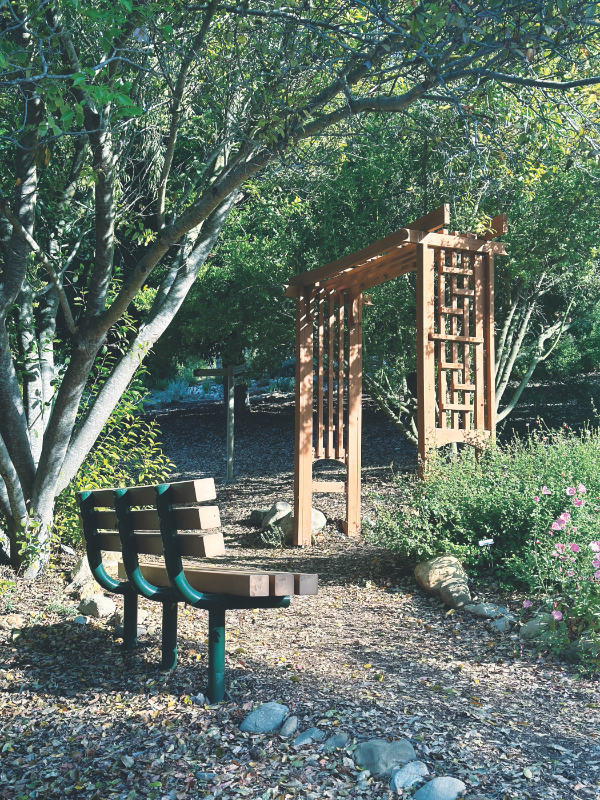
And then comes the return.
This is perhaps the most important movement of all. The goal is not to remain on the hill, not to build a shelter there, not to freeze the moment. Peter once wanted to stay on the mountain. “Lord, it is good for us to be here” (Matthew 17:4, NKJV), he anxiously said. But Jesus led them back down. The Christian life is not about remaining in moments of clarity; it is about returning to daily life carrying what we have received.
The goal is to return—with oneself. To descend, carrying what was found: breath, gratitude, awareness, joy. In the Gospel story, the disciples do not remain at the Mount of Transfiguration. They must come down, back into the world, back into need. And every day, I head back.
Christian faith is not an escape. It is a return—again and again—to daily life, bearing within us the quiet assurance that we are held. That we belong. That even in fatigue, even in uncertainty, even in the ordinary rhythms of morning walks and measured steps, Christ walks with us.
The hill does not save us. The walk does not redeem us. But in grace, Christ uses small, faithful acts to remind us of who we are: beloved, alive, and still becoming.
And so each morning, my prayer is simple—not for strength to climb higher, but for grace to show up. Not to conquer the hill, but to meet myself. And to return—whole, held, and thankful. “The steadfast love of the Lord never ceases, his mercies never come to an end; they are new every morning” (Lamentations 3:22-23, ESV).
That is the gospel I walk into each dawn. And that is the Christ who walks with us—up the hill, and all the way back down.
_____________________________
Alberto Valenzuela is the associate director of communication and community engagement for the Pacific Union Conference and editor of the Recorder.
Encuentro en la colina
Cada mañana comienza para mí de la misma manera: despierto con expectación, salgo y camino hacia una pequeña colina detrás del complejo de apartamentos. Nada dramático. Ningún trueno. Ninguna voz del cielo. Solo un bastón en la mano y un corazón que espera en silencio descubrir lo que revelará el día. En esa pequeña colina se encuentra el Conejo Valley Botanical Garden, y muchos recorren sus senderos a diario, yo entre ellos.
Las Escrituras conocen bien este ritmo. «Este es el día en que el Señor ha hecho; regocijémonos y alegrémonos en él» (Salmo 118:24). No es un día extraordinario. Es simplemente un día. En el que despertamos con las articulaciones rígidas, recuerdos persistentes y una esperanza serena. En muchos sentidos, ese sencillo ritual se convierte en una parábola de la fe misma: la fe no como conquista, sino como realización; no como certeza, sino como gracia recibida de nuevo.
La colina es modesta. No se compara con las colinas de mi juventud, que ascendía con fuerza, confianza y quizá un poco de bravuconería. Esta colina es distinta. La subo lentamente, con atención, a veces con fatiga, a veces sudando, siempre consciente de mis limitaciones. Y, sin embargo, es precisamente aquí —en esta colina más pequeña— donde algo silenciosamente teológico se manifiesta.
La Biblia sitúa algunos acontecimientos muy importantes en diversas montañas. Encontramos a Moisés recibiendo los Diez Mandamientos en el monte Sinaí u Horeb (Éxodo 19–24); el arca reposa sobre el monte Ararat después del diluvio (Génesis 8:4); Elías confronta a los profetas de Baal en el monte Carmelo (1 Reyes 18); Moisés contempla la Tierra Prometida desde el monte Nebo (Deuteronomio 34). Sin embargo, las Escrituras también relatan encuentros profundos que no ocurren en grandes montañas, sino en los senderos comunes de la vida cotidiana. Jesús encuentra a unos pescadores mientras reparan sus redes (Lucas 5). Habla con una mujer samaritana mientras ella saca agua (Juan 4). Se une a dos discípulos desilusionados en un camino, mientras se alejan de Jerusalén (Lucas 24). Resulta que la gracia no nos espera en la cumbre de nuestros logros; nos encuentra en el camino, en movimiento, en pleno proceso.
Para mí, la caminata matutina se convierte en una liturgia. La preparación —agua, gorra, guantes si hacen falta— refleja la serena disposición de la oración. La espera del amanecer evoca la confesión del salmista: «Espero al Señor con toda el alma, más que los centinelas la mañana» (Salmo 130:6). Y cuando irrumpe la luz, la creación misma parece darme la bienvenida. Las flores se abren. Las aves emprenden el vuelo. La fragancia llena el aire. El mundo no exige nada; sencillamente se me ofrece como un regalo.
Eso es la gracia.
La gracia no se gana subiendo más alto ni más rápido. La gracia se recibe cuando nos hacemos presentes, cuando salimos a pesar de la rigidez, de los recuerdos, del temor a lo que nuestro cuerpo ya no puede hacer. Después de la cirugía, después de largos meses de movimiento limitado, regresar a la colina no es un logro; es una especie de resurrección. No la clase de resurrección triunfal, sino silenciosa: Todavía estoy aquí. Todavía estoy vivo.
El cuerpo resucitado de Jesús lleva cicatrices. Ese detalle importa. El Cristo resucitado no borra el dolor; lo lleva consigo, transformado. Del mismo modo, cada paso colina arriba carga una historia: edad, lesión, pérdida, anhelo. Sin embargo, nada de eso nos descalifica para la caminata. Al contrario, la hace más profunda. Isaías nos recuerda: «Aun en la vejez, cuando ya peinen canas, yo seré el mismo, yo los sostendré» (Isaías 46:4). La gracia no nos devuelve a quienes fuimos; nos encuentra tal como somos.
A lo largo del sendero tengo compañeros y desconocidos: coyotes, codornices que se dispersan, correcaminos, un cuervo que observa desde lo alto; todos probablemente se preguntan qué hago ahí tan temprano. Incluso la ausencia se vuelve parte del paisaje: ya no veo a la mujer con quien solía encontrarme antes del covid; tampoco está el joven que una vez dormía allí. La fe también se configura tanto por quienes faltan como por quienes están presentes. La vida cristiana nunca es estática. Las personas van y vienen. Las estaciones cambian. Pero Cristo sigue siendo el compañero fiel del camino, aun cuando al principio no lo reconocemos.
En la cima de la colina, la vista se abre. Las casas al fondo. La iglesia adventista de Thousand Oaks domina parte del panorama. Otras colinas más allá. La vida continúa en todas direcciones. Y, por un momento, hay perspectiva. No dominio, solo claridad. Eso es lo que ofrece la gracia: no el control de la vida, sino el don de verla correctamente.
Y entonces llega el regreso.
Quizá ese sea el movimiento más importante de todos. El objetivo no es permanecer en la colina, ni construir allí un refugio, ni inmovilizar el momento. Pedro quiso una vez quedarse en el monte. «Señor, ¡qué bien que estemos aquí!» (Mateo 17:4), dijo con ansiedad. Pero Jesús los condujo de regreso abajo. La vida cristiana no consiste en permanecer en los momentos de claridad, sino en volver a la vida cotidiana llevando con nosotros lo que hemos recibido.
El objetivo es regresar con uno mismo. Descender llevando lo encontrado: aliento, gratitud, consciencia, alegría, expectativa. En el relato de los evangelios, los discípulos no permanecen en el monte de la Transfiguración. Deben bajar, volver al mundo, volver al lugar de la necesidad. Y cada día emprendo el camino de regreso.
La fe cristiana no es una vía de escape. Es un regreso —una y otra vez— a la vida cotidiana, llevando dentro de nosotros la serena certeza de que alguien nos sostiene. De que le pertenecemos. De que, incluso en medio del cansancio, de la incertidumbre y de los ritmos comunes de las caminatas matutinas y los pasos medidos, Cristo camina con nosotros.
La colina no nos salva. La caminata no nos redime. Pero, por gracia, Cristo se vale de actos pequeños y fieles para recordarnos quiénes somos: amados, con vida y todavía en proceso de llegar a ser.
Por eso, cada mañana mi oración es sencilla: no pido fuerzas para subir más alto, sino gracia para hacerme presente. No para conquistar la colina, sino para encontrarme conmigo mismo. Y para regresar: entero, sostenido y agradecido. «El gran amor del Señor nunca se acaba, y su compasión jamás se agota. Cada mañana se renuevan sus bondades» (Lamentaciones 3:22–23).
Ese es el evangelio al que me adentro con cada amanecer. Y ese es el Cristo que camina con nosotros: subiendo la colina y durante todo el camino de regreso.
_____________________________
Alberto Valenzuela es director asociado de Comunicación y Participación Comunitaria de Pacific Union Conference y editor del Recorder.