
The Last Word
By Alberto Valenzuela
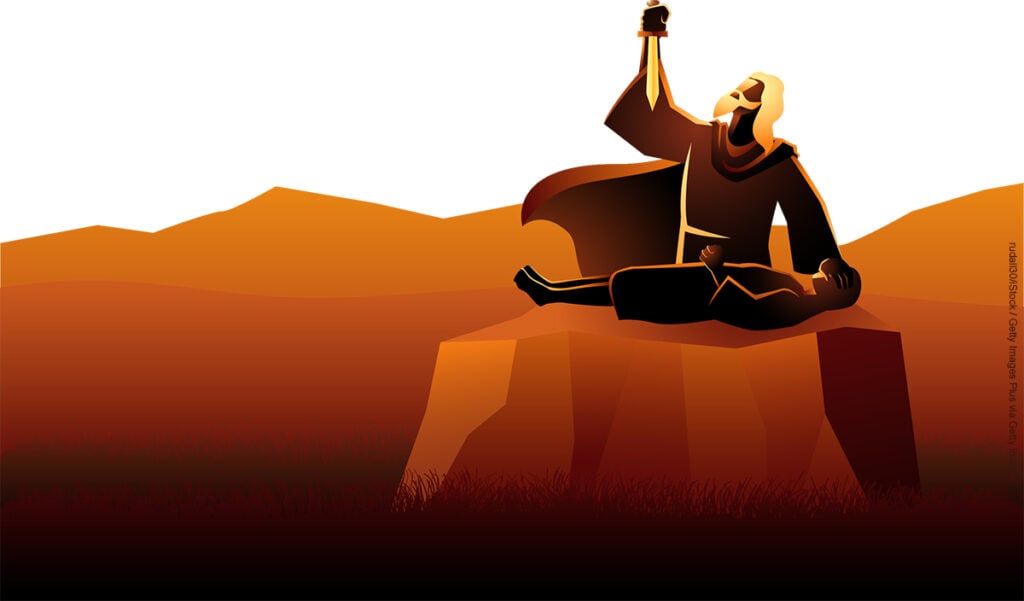
There are moments in Scripture that seem safely distant—stories we have heard so often that they begin to feel settled, almost predictable. And then there are moments that, if we allow them to linger, begin to press uncomfortably into our own lives. Abraham standing on Mount Moriah with Isaac is one of those moments (Genesis 22). We know the outline by heart: the command, the journey, the altar, the raised knife, the divine interruption. It is often told to illustrate the ultimate expression of faith. And yet, when that same story is read through the lens of fatherhood, it becomes far more complex, far less comfortable, and infinitely more personal.
Because this is not only a story about obedience. It is also a story about a father and his son.
And once you read it that way, it is difficult not to bring your own life into it.
I find myself thinking about Camila, my daughter.
From the beginning, she has had a way of grounding me, of bringing me back to what really matters, not through dramatic moments but through the small, ordinary details that quietly shape a relationship. I think of something as simple as the way she used to say “Taco Bell” when she was a toddler: pakabai. I didn’t see it happening, but it became part of our shared language. Even now, I still say it sometimes. It is a small memory, but it carries with it something larger: presence, laughter, the sense of being fully there with her. It reminds me that fatherhood is not built on grand gestures but on the accumulation of ordinary moments we choose not to rush past.
Which is why Abraham’s story unsettles me.
Because somewhere along the way, Abraham—
a man of extraordinary faith—seems to move in a direction where obedience leaves little room for relationship. He acts, he responds, he follows, but in that defining moment, he does not pause, does not question, does not wrestle as he once did when interceding for Sodom. The silence is striking.
What kind of father lifts a knife over his son in the name of obedience?
That question is not meant to dismiss Abraham but an effort to see him honestly. When we look closely, we begin to notice that his life is not only marked by faith but also by fear: the moments when he misrepresents Sarah to protect himself, the decision to send Hagar and Ishmael away, the instinct to act quickly in situations that might have called for deeper trust.
And that is where the story begins to feel uncomfortably familiar.
Because fear is not foreign to fatherhood. It shows up quietly, shaping how we respond to our children, how quickly we correct, how tightly we hold on, how much we try to control outcomes we ultimately cannot control. It hides behind good intentions, behind responsibility, behind the desire to do everything right.
I have felt that tension.
Not in dramatic decisions, but in the daily rhythm of being a father—the moments when I have had to decide whether to speak quickly or listen longer, whether to correct or to understand, whether to hold firmly or to let go a little. And what I am learning, slowly, is that fatherhood is not defined by getting every decision right but by the posture that shapes those decisions—the spirit we bring to the relationship.
The story of Abraham does not end on the mountain, and perhaps one of the most sobering aspects of the narrative is how quietly the consequences unfold. There is no dramatic confrontation, but there is distance. Sarah and Isaac move away, and when Isaac appears later, it is not to restore intimacy but to fulfill a duty.1 Something was altered on that mountain in ways that were not easily repaired.
That quiet aftermath matters. It reminds us that even acts framed as faithfulness can carry relational consequences when they are disconnected from presence and love. It suggests that obedience, when shaped by fear, can create distance instead of trust. And it invites us to imagine a different kind of fatherhood.
Jesus offers that image in the parable of the prodigal son—a father who releases without losing connection, who allows freedom without withdrawing love, who waits without controlling, and who, when the son returns, responds not with correction but with embrace. It is a picture of strength rooted not in control but in trust.
That kind of fatherhood is harder.
It requires letting go of the illusion that we can manage every outcome. It asks us to trust that God is at work in our children’s lives in ways we cannot see. It calls us to choose relationship over being right, presence over performance.
When I think about Camila—about the years that have already passed and the ones that remain—I am increasingly aware that what matters most is not a single defining moment but the accumulation of how I show up: whether I listen, whether I create space for her voice, whether home feels like a place where she can be herself without fear.
Those moments will never feel dramatic, but they are the substance of fatherhood.
If Abraham’s story teaches me anything, it is both a warning and an invitation—a warning about the cost of allowing fear to shape our responses, and an invitation to rethink the kind of fathers we are becoming. Because perhaps the most courageous act of fatherhood is not decisive action at any cost but the willingness to remain—to stay present, to listen, to trust, to love in ways that preserve relationship rather than fracture it.
Abraham is remembered as a man of faith, not because he was perfect but because his story, with all its tension and failure, became part of a larger narrative of grace. And that is where hope resides. Not in getting everything right, but in continuing to move—imperfectly but intentionally—toward love instead of fear, toward presence instead of distance, toward trust instead of control. Because in the end, the father our children need is not a perfect one but a present one—and perhaps that, more than anything else, is what reflects the heart of God.
_____________________________
Alberto Valenzuela is the associate director of communication and community engagement for the Pacific Union Conference and editor of the Recorder.
1Wendy Zierler, “Sarah Finally Separates Herself from Abraham,” The Torah.com (2024), https://www.thetorah.com/article/sarah-finally-separates-herself-from-abraham.
La última palabra:
La fe, el temor y el costo de la paternidad
Por Alberto Valenzuela
Hay puntos en las Escrituras que parecen estar a una distancia segura: historias que hemos escuchado tantas veces que comienzan a sentirse resueltas, casi predecibles. También hay momentos que, si les permitimos hablarnos, comienzan a incomodarnos. Abraham de pie sobre el monte Moriah con Isaac es uno de esos momentos (Génesis 22). Conocemos el esquema de memoria: el mandato, el viaje, el altar, el cuchillo en alto, la intervención divina. A menudo se cuenta para ilustrar la expresión máxima de la fe. Sin embargo, cuando esa misma historia se lee a través del lente de la paternidad, se vuelve mucho más compleja, mucho más incómoda y profundamente más personal.
Porque no es solamente una historia acerca de obediencia. También es una historia acerca de un padre y su hijo.
Una vez que la lee de esa manera, resulta difícil pensar en tu propia vida.
Al reflexionar en esa historia no puedo dejar de pensar en Camila, mi hija.
Desde el principio, Cami ha tenido una manera de anclarme, de llevarme a lo que realmente importa, no por medio de momentos dramáticos sino a través de los pequeños detalles cotidianos que silenciosamente moldean una relación. Pienso en algo tan simple como la forma en que decía “Taco Bell” cuando era pequeña: pakabai. No sé cuándo comenzó, pero se convirtió en parte de nuestro lenguaje. Todavía lo digo de vez en cuando. Es un recuerdo pequeño, pero lleva consigo algo mucho más grande: presencia, risa, la sensación de estar completamente con ella. Me recuerda que la paternidad no se edifica con grandes gestos, sino sobre la acumulación de momentos ordinarios que decidimos no apresurar.
Por eso la historia de Abraham me inquieta.
Porque en algún momento, Abraham —un hombre de fe extraordinaria— parece moverse en una dirección donde la obediencia deja poco espacio para la relación. Actúa, responde, sigue adelante, pero en ese momento decisivo no se detiene, no cuestiona, no lucha como lo hizo cuando intercedió por Sodoma. El silencio es impactante.
¿Qué clase de padre levanta un cuchillo sobre su hijo en nombre de la obediencia?
Esa pregunta no busca descartar a Abraham, sino intentar verlo con honestidad. Cuando observamos de cerca, comenzamos a notar que su vida no solamente está marcada por la fe, sino también por el temor: los momentos en que presenta falsamente a Sara para protegerse, la decisión de echar de casa a Agar e Ismael, el impulso de actuar impulsivamente en situaciones que quizá requerían más reflexión de su parte.
Es ahí donde la historia comienza a sentirse incómodamente familiar.
Porque el temor no es ajeno a la paternidad. Aparece silenciosamente, moldeando la forma como tratamos a nuestros hijos, cuán rápido corregimos, cuán tercos somos, cuánto tratamos de controlar resultados que finalmente no podemos controlar. Se esconde detrás de buenas intenciones, detrás de la responsabilidad, detrás del deseo de hacerlo todo correctamente.
Yo he sentido esa tensión.
No en decisiones dramáticas, sino en el ritmo cotidiano de ser padre: los momentos en que he tenido que decidir si hablar rápidamente o escuchar más, si corregir o comprender, si ser constante o más liberal. Lo que he aprendido, lentamente, es que la paternidad no se define por acertar en cada decisión, sino por la postura que da forma a esas decisiones: el espíritu que llevamos a la relación.
La historia de Abraham no termina en ese monte, y quizá uno de los aspectos más sobrios de la narrativa es la manera tan silenciosa en que las consecuencias se desarrollan. No hay una confrontación dramática, pero sí hay distanciamiento. Sara e Isaac se apartan, y cuando Isaac vuelve a aparecer más adelante, no es para restaurar intimidad sino para cumplir un deber.1 Algo cambió en aquel monte de manera que no fue fácil de reparar.
Ese silencioso desenlace importa. Nos recuerda que incluso actos presentados como fidelidad pueden tener consecuencias relacionales cuando están desconectados de la presencia y del amor. Sugiere que la obediencia, cuando está moldeada por el temor, puede crear distanciamiento en lugar de confianza. Nos invita a imaginar un tipo diferente de paternidad.
Jesús ofrece esa imagen en la parábola del hijo pródigo: un padre que lo deja ir sin perder la conexión, que permite libertad sin retirar su amor, que espera sin controlar y que, cuando el hijo regresa, responde no con corrección sino con un abrazo. Es una imagen de fortaleza arraigada no en el control, sino en la confianza.
Ese tipo de paternidad es más difícil.
Requiere abandonar la ilusión de que podemos controlar cada resultado. Nos pide confiar en que Dios está obrando en la vida de nuestros hijos de maneras que no podemos ver. Nos llama a escoger la relación por encima de tener la razón, la presencia por encima del desempeño.
Cuando pienso en Camila —en los años que ya han pasado y en los que aún quedan— soy cada vez más consciente de que lo que más importa no es un único momento decisivo, sino la acumulación de la manera en que estoy presente: si escucho, si creo espacio para su voz, si el hogar se siente como un lugar donde ella puede ser ella misma sin temor.
Esos momentos nunca parecerán dramáticos, pero son la esencia de la paternidad.
Si la historia de Abraham me enseña algo, es tanto una advertencia como una invitación: una advertencia acerca del costo de permitir que el temor moldee nuestras actitudes, y una invitación a reconsiderar el tipo de padres en que nos estamos convirtiendo. Porque quizá el acto más valiente de la paternidad no es la acción decisiva a cualquier precio, sino la disposición de permanecer: quedarse presente, escuchar, confiar, amar de maneras que preserven la relación en lugar de fracturarla.
Abraham es recordado como un hombre de fe, no porque haya sido perfecto, sino porque su historia, con toda su tensión y sus fracasos, se convirtió en parte de una narrativa más grande de la gracia. Es ahí donde reside la esperanza. No en hacerlo todo bien, sino en continuar avanzando —imperfecta pero intencionalmente— hacia el amor en lugar del temor, hacia la presencia en lugar de la distancia, hacia la confianza en lugar del control. Porque al final, el padre que nuestros hijos necesitan no es uno perfecto, sino uno presente; y quizá eso, más que cualquier otra cosa, es lo que refleja el corazón de Dios.
Alberto Valenzuela es el editor del Recorder.