
(PHOTO: ALONZO BAKER, MY SISTER ALMA AND I (PACIFIC PRESS PUBLISHING ASSOCIATION, 1980), AT ARCHIVE.ORG.)
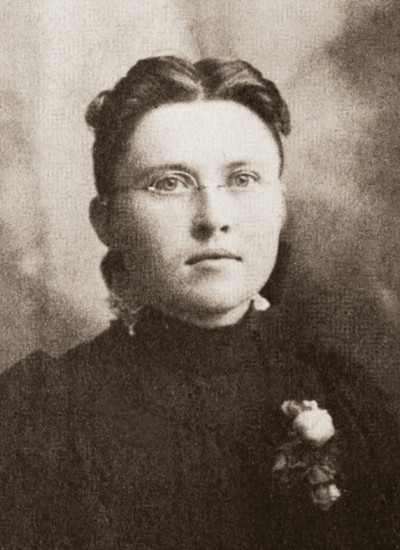
If you had visited Healdsburg College in the year 1889, you probably would have met a pleasant young lady of 18 years who was training to become a teacher. Alma Estelle Baker had been born in Webster County, Iowa, and she had come to California from her most recent home in Saguache, Colorado. She had only quite recently been baptized, along with her mother and grandmother. Her father was an ardent atheist who burned any Adventist books that were mailed to the home.
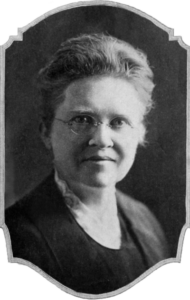
(PHOTO: DEPARTMENT OF ARCHIVES AND SPECIAL COLLECTIONS, LOMA LINDA UNIVERSITY)
Alma took the teacher training course at Healdsburg and also signed up for Bible worker courses and tried her hand as a literature evangelist. While at Healdsburg she grew fond of another student, Edwin McKibbin. However, in her third year of studies, she fell seriously ill. She was so sick that the doctor attending her told the college president, W.C. Grainger, that she would die by morning.
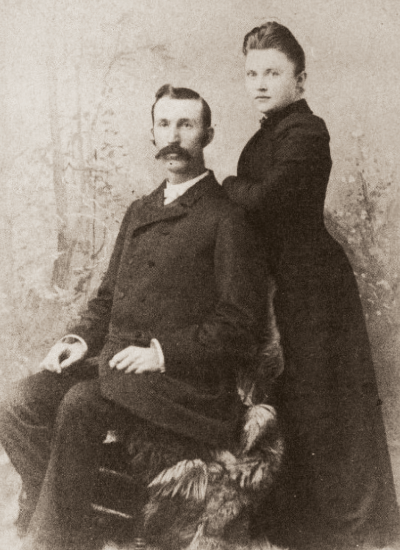
Miraculously she survived, but her recovery was very slow. She stayed in the Graingers’ home for several weeks. Edwin, who had completed his course before her, was already working as a teacher at Healdsburg. He declared that he wanted to marry Alma, despite her illness and the fact that they were not actually engaged. So in 1892, after she first was presented with her diploma, Alma and Edwin were married in the living room of the Graingers’ home. Their “honeymoon” was a three-block trip to Edwin’s home—and she had to be carried there. She was cared for by Edwin and his sister Marian.
Alma had been so ill, yet she was able to make a wonderful recovery after a prayer meeting that summer. But heartbreak arrived when Edwin contracted tuberculosis. That winter Alma taught Edwin’s classes. In 1894, the couple moved to Southern California with their baby son, Lorin, to stay with Edwin’s relatives while Alma worked. Tragically, baby Lorin died that same year at 11 months of age. Then, just two years later, Edwin also died.
Alma was left alone. She was just 25 years old. With no job and no money, she moved in with friends at San Pasqual in 1897. There she began teaching their children to read and started a home school in their parlor. Then she was asked to teach at the one-room school at Centralia, where she showed her real talent—teaching without books and writing every lesson on the blackboard. Why? The local members did not want the regular school textbooks because they included “myths and fairytales.” They wanted to follow Ellen White’s counsel that education should be Bible-based.
But as Alma herself said, “No other principle revealed to us occasioned so much perplexity and discussion as did this one. The Bible was to be the ‘groundwork and subject matter of education.’ What did these expressions mean, and how were they to be carried out?”1 She recalls, “I can remember…whenever the Review came, we tore off the wrapper hastily, to see what Sister White said this week about this matter. Every church was discussing it. ‘Why,’ one would say to another, ‘Sister White has sent a testimony, and she says that we should have schools for all of our children from the first grade onward.’ And the next question would be, ‘How in the world are we to do it?’”2
While many Adventists recognized the importance of Ellen White’s counsel on education, Alma commented that “no group of educators or Conference officials made any effort to establish church schools on the Pacific Coast. The first schools were established by local churches, each acting independently of every other, and with no help or advice from any source except what the members read in the Review.”3
Without any practical resources, she had no choice but to develop them herself. Consequently, she taught from 8 a.m. to 6 p.m. daily and then returned to her unheated attic room to prepare lessons through the night for the following day. She was placed in charge of 35 students in grades one through nine, with one student older than she was!
At the same time, there were many distractions and attempts to make her give up teaching in such a difficult situation. The unheated schoolroom’s walls were so open that the Santa Ana winds whistled right through, blowing so much sand over everything that the children couldn’t see to read. Alma’s landlady tried to discourage her, asking her every day if she really wanted to bother to continue. A doctor friend warned her about her failing health and urged her to come to his sanitarium. He said that once she was well, he would offer her employment. Another friend who was principal of the public school in Anaheim offered her a job in his school, stating that she would fail in teaching at a church school.
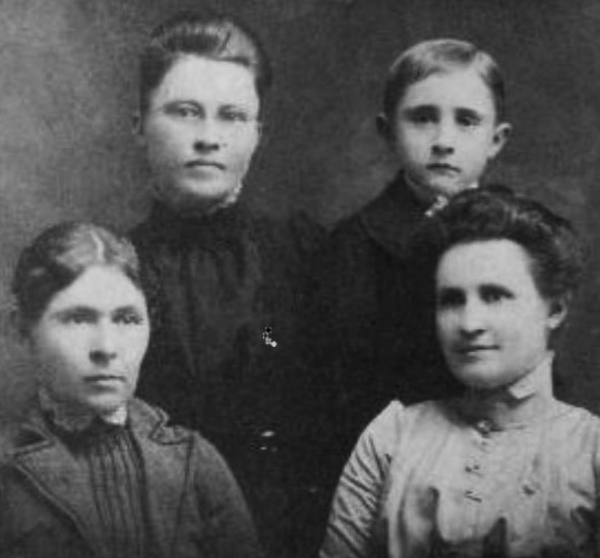
(PHOTO: ALONZO BAKER, MY SISTER ALMA AND I (PACIFIC PRESS PUBLISHING ASSOCIATION, 1980), AT ARCHIVE.ORG.)
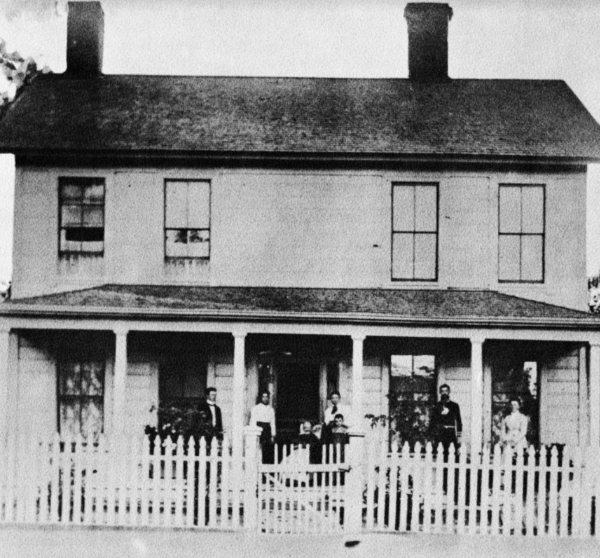
(PHOTO: CENTER FOR ADVENTIST RESEARCH.)
Despite such offers and objections, Alma was determined to keep her promise to teach for the whole school year. And she did, despite having to take time off after contracting double pneumonia. She returned to teach after the members pledged to take care of some of the problems by plastering the walls of the school room and providing a working stove. Sadly, this meant that they spent all of the money they would have used to pay her! So she subsisted on very little, eating mainly walnuts, the main local crop.
As she wrote, “The church schools began with nothing. We hadn’t a textbook.… If God was not in [this movement], do you think with such a beginning as that it ever could have succeeded? There wasn’t a Bible lesson for a church school anywhere. I had to write them and teach them the next day.”4
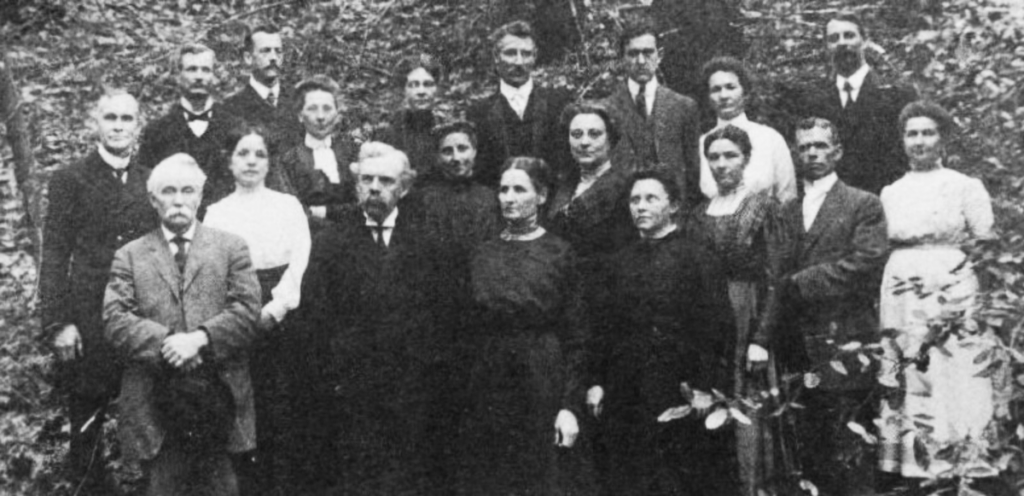
After Alma finished in Centralia and returned to Healdsburg, M.E. Cady, the president-elect of the college, offered her a job teaching in the school, with the promise of providing teacher’s training at the same time. Unfortunately, when she arrived, Cady had to leave to take care of his move from Union College, and Alma was told she was to be the one to teach 11 other prospective teachers how to teach in a church school—because she was the only one who had had the experience of doing so!
She wrote, “I am not a stranger to disappointment, but none was greater than this. I had a bad night, a very bad night. I learned a hard lesson. I learned not to expect human help, not to lean on others.” “I can see those eleven teachers…sitting there before me with their mouths open. They took in every word I said. And I’d go home and I’d say, ‘Lord. You’ll have to tell me what to teach them tomorrow; You know I don’t know.’”5
During a summer school for teachers in 1900, Alma worked with a committee that produced a small booklet called “Course of Study for Church Schools.” Then she worked on “Bible Lessons for the Church School,” which was printed in 1903. As she wrote, she had a visit from Ellen White, who was very interested in her project of writing Bible lessons for church schools. When she stated that she was having a hard time dealing with some parts of the Old Testament, Ellen White sent over some relevant books, together with her unpublished manuscript of Prophets and Kings.
When Healdsburg closed in 1908, the local church lost many members, and Alma was asked to take over the services. She functioned as the local pastor and was given missionary credentials. Eventually she moved on to work at Pacific Union College.
In 1909, Pacific Press began publishing Alma’s Bible Lessons, a graded series of Bible textbooks for elementary schools. From then on, many of the texts for Adventist schools were authored by Alma, and they were still being used in the 1950s.
But there’s more. In her time at Pacific Union College, she also cared for her bedridden mother and grandmother and her younger brother Lonnie (Alonzo L. Baker).
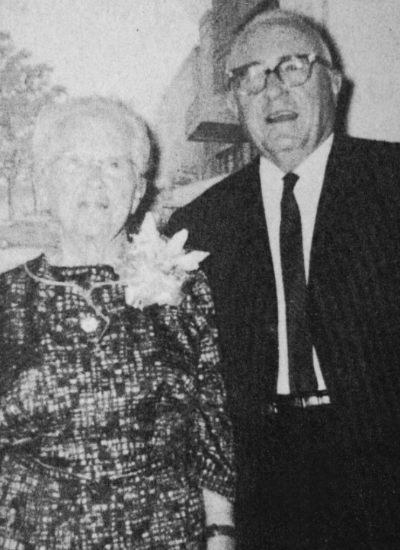
It is hard to imagine how she had the strength to do so much! Her work was truly a lifetime achievement.6 Alma achieved the grand old age of 103, having been given just hours to live when she was 21.
_____________________________
1Marie Louise Myers, Historical/Analytical Study of the Contributions of Alma E. McKibbin to the Seventh-Day Adventist Church School System (Ph.D. dissertation, Andrews University, 1992), p. 93, https://digitalcommons.andrews.edu/dissertations/593.
2Myers, p. 100.
3Myers, p. 106.
4Myers, p. 151.
5Myers, pp.155-156.
6For more on Alma McKibbin’s life, see Laura Wibberding, “McKibbin, Alma Estelle (Baker) (1871-1974),” https://encyclopedia.adventist.org/article?id=AIPT.
Alma McKibbin:
Primera educadora adventista en California
(PHOTO: ALONZO BAKER, MY SISTER ALMA AND I (PACIFIC PRESS PUBLISHING ASSOCIATION, 1980), AT ARCHIVE.ORG.)
Si hubieras visitado Healdsburg College en 1889, probablemente habrías conocido a una joven agradable de 18 años que se estaba formando para ser profesora. Alma Estelle Baker había nacido en el condado de Webster, Iowa, y había llegado a California desde su hogar más reciente en Saguache, Colorado. Ella había sido bautizada poco tiempo antes, junto con su madre y su abuela. Su padre era un ateo ferviente que quemaba cualquier libro adventista que llegaba por correo a su casa.
(PHOTO: DEPARTMENT OF ARCHIVES AND SPECIAL COLLECTIONS, LOMA LINDA UNIVERSITY)
Alma realizó el curso de formación de profesores en Healdsburg, también se apuntó a cursos de obreras bíblicas y probó su suerte como colportora. Mientras estaba en Healdsburg, se encariñó con otro estudiante, Edwin McKibbin. Sin embargo, en su tercer año de estudios, cayó gravemente enferma. Estaba tan enferma que el médico que la atendía le dijo al presidente del colegio, W.C. Grainger, que moriría antes del amanecer.
Milagrosamente sobrevivió, pero su recuperación fue muy lenta. Se quedó en casa de los Grainger durante varias semanas. Edwin, que había completado su curso antes que ella, ya trabajaba como profesor en Healdsburg. Declaró que quería casarse con Alma, a pesar de su enfermedad y de que en realidad no estaban comprometidos. Así que en 1892, tras recibir primero su diploma, Alma y Edwin se casaron en la sala de la casa de los Grainger. Su «luna de miel» fue un viaje de tres cuadras hasta la casa de Edwin y ella tuvo que ser llevada allí. Fue cuidada por Edwin y su hermana Marian.
Alma había estado muy enferma, pero pudo recuperarse maravillosamente tras una reunión de oración aquel verano. Pero el dolor llegó cuando Edwin contrajo tuberculosis. Ese invierno, Alma enseñó las clases de Edwin. En 1894, la pareja se mudó al sur de California con su hijo pequeño, Lorin, para quedarse con los familiares de Edwin mientras Alma trabajaba. Trágicamente, el bebé Lorin murió ese mismo año a los 11 meses de edad. Más tarde, solo dos años después, Edwin también falleció.
Alma se quedó sola. Tenía solo 25 años. Sin trabajo y sin dinero, se mudó a vivir con amigos en San Pasqual en 1897. Allí comenzó a enseñar a leer a sus hijos y puso en marcha una escuela en la sala de su casa. Después le pidieron que enseñara en la escuela de una aula de Centralia, donde mostró su verdadero talento: enseñar sin libros y escribir cada lección en la pizarra. ¿Por qué? Los miembros de iglesia no querían los libros de texto escolares regulares porque incluían «mitos y cuentos de hadas». Querían seguir el consejo de Ellen White de que la educación debería basarse en la Biblia.
Pero como dijo la misma Alma, «Ningún otro principio revelado nos causó tanta perplejidad y discusión como ese. La Biblia debía ser la “base y materia de la educación”. ¿Qué significaban esas expresiones y cómo debían llevarse a cabo?»1 Recuerda: «Puedo recordar… siempre que llegaba la Review, rompíamos el envoltorio a toda prisa, para ver qué decía la hermana White esa semana sobre ese asunto. Todas las iglesias lo discutían. “¿Por qué”, decía uno a otro, “la hermana White ha enviado un testimonio y dice que deberíamos tener escuelas para nuestros hijos desde primero de primaria”. Y la siguiente pregunta sería: “¿Cómo diantres vamos a hacerlo?”».2
Aunque muchos adventistas reconocían la importancia del consejo de Ellen White sobre educación, Alma comentó que «ningún grupo de educadores ni funcionarios de la Conferencia hizo ningún esfuerzo por establecer escuelas de iglesia en la costa del Pacífico. Las primeras escuelas fueron establecidas por las iglesias, cada una actuando de forma independiente de las demás, y sin ayuda ni consejo de ninguna fuente salvo lo que los miembros leían en la Review».3
Sin recursos prácticos, no tuvo más remedio que desarrollarlos ella misma. Para ello, enseñaba de 8 a.m. a las 6 p.m. todos los días y regresaba después a su habitación sin calefacción en el ático para preparar clases durante la noche para el día siguiente. Fue puesta a cargo de 35 alumnos de primero a noveno año, ¡con un alumno mayor que ella!
Al mismo tiempo, hubo muchas distracciones e intentos de hacerla dejar la enseñanza en una situación tan difícil. Las paredes del aula sin calefacción estaban tan a la interperie que los vientos Santa Ana soplando tanta arena sobre todo que los niños no podían ver ni leer. La arrendadora de Alma intentó desanimarla, preguntándole cada día si realmente quería seguir adelante. Un amigo médico le advirtió sobre su deteriorada salud y la instó a acudir a su sanatorio. Le dijo que, una vez que estuviera bien, le ofrecería empleo. Otro amigo, que era director de la escuela pública de Anaheim, le ofreció trabajo en su escuela, alegando que fracasaría enseñando en una escuela de iglesia.
(PHOTO: ALONZO BAKER, MY SISTER ALMA AND I (PACIFIC PRESS PUBLISHING ASSOCIATION, 1980), AT ARCHIVE.ORG.)
(PHOTO: CENTER FOR ADVENTIST RESEARCH.)
A pesar de tales ofertas y objeciones, Alma estaba decidida a cumplir su promesa de enseñar durante todo el año escolar. Lo hizo, a pesar de tener que tomar un tiempo libre tras contraer doble neumonía. Volvió a enseñar después de que los miembros se comprometieran a solucionar algunos de los problemas enlucidiendo las paredes del aula y proporcionando una estufa funcional. Por desgracia, eso significó que gastaron todo el dinero que tenían disponible para pagarle. Así que subsistía con muy poco, comiendo principalmente nueces, el principal cultivo del área.
Como escribió, «las escuelas de iglesia empezaron de cero. No teníamos un libro de texto…. Si Dios no hubiera estado en [este movimiento], ¿crees que con un comienzo así podría haber tenido éxito? No había ninguna lección bíblica para una escuela de iglesia en ningún sitio. Tenía que escribirlas y enseñarlas al día siguiente».4
Tras terminar en Centralia y regresar a Healdsburg, M.E. Cady, el recién elegido presidente del colegio, le ofreció un puesto como profesora, con la promesa de proporcionarle formación docente al mismo tiempo. Desafortundamente, cuando llegó, Cady tuvo que marcharse para ocuparse de su traslado de Union College, y a Alma le dijeron que sería ella quien enseñaría a otros 11 futuros profesores en una escuela de iglesia —¡porque era la única que había tenido esa experiencia!
Escribió: «No soy ajena a la decepción, pero ninguna fue mayor que esa. Pasé una mala noche, una noche muy mal. Aprendí una dura lección. Aprendí a no esperar ayuda humana, a no apoyarme en los demás. Veo a esos once futuros profesores… sentados delante de mí con la boca abierta. Asimilando cada palabra que decía. Llegaba a casa y decía: “Señor. Tendrás que decirme qué enseñarles mañana; Sabes que no tengo idea”».5
Durante una escuela de verano para profesores en 1900, Alma trabajó con un comité que elaboró un pequeño folleto llamado «Curso de estudios para escuelas de iglesia». Después trabajó en «Lecciones bíblicas para la escuela de iglesia», que se imprimió en 1903. Mientras escribía, recibió la visita de Ellen White, que estaba muy interesada en su proyecto de escribir lecciones bíblicas para las escuelas de iglesia. Cuando afirmó que le costaba lidiar con algunas partes del Antiguo Testamento, Ellen White le envió algunos libros relevantes, junto con su manuscrito inédito de Profetas y reyes.
Cuando Healdsburg cerró en 1908, la iglesia perdió muchos miembros y se le pidió a Alma que se hiciera cargo de los cultos. Ejerció como pastora y recibió credenciales misioneras. Finalmente, pasó a trabajar en Pacific Union College.
En 1909, la Pacific Press comenzó a publicar las lecciones bíblicas de Alma, una serie graduada de libros de texto bíblicos para escuelas primarias. A partir de entonces, muchos de los textos de las escuelas adventistas fueron escritos por Alma, y seguirían utilizándose en los años 50.
Pero hay más. Durante su etapa en Pacific Union College, también cuidó de su madre y su abuela postradas en cama y de su hermano menor, Lonnie (Alonzo L. Baker).
¡Cuesta imaginar cómo tuvo la fuerza para hacer tanto! Su trabajo fue realmente un logro de toda una vida.6 Alma alcanzó la edad de 103 años, habiendo recibido la noticia de que le quedaban unas horas de vida cuando tenía 21 años.
_____________________________
1Marie Louise Myers, Historical/Analytical Study of the Contributions of Alma E. McKibbin to the Seventh-Day Adventist Church School System (Ph.D. dissertation, Andrews University, 1992), p. 93, https://digitalcommons.andrews.edu/dissertations/593.
2Myers, p. 100.
3Myers, p. 106.
4Myers, p. 151.
5Myers, pp.155-156.
6Para más información sobre la vida de Alma McKibbin, ver Laura Wibberding, «McKibbin, Alma Estelle (Baker) (1871-1974)», https://encyclopedia.adventist.org/article?id=AIPT.