
By Ray Tetz

The first time I remember it being displayed was by a very popular star signaling to her fans in concert footage posted on social media. During the World Cup, I saw athletes responding to the crowds with the gesture after a goal. Perhaps you’ve encountered it online in a video call—used by a young family member in an emotional moment. It is often flashed by friends posing for photographs or shown by someone offering encouragement from a distance. At some point in the last 20 years or so, it became a global sign of affection, encouragement, and appreciation. I’m talking about the hand-heart sign.
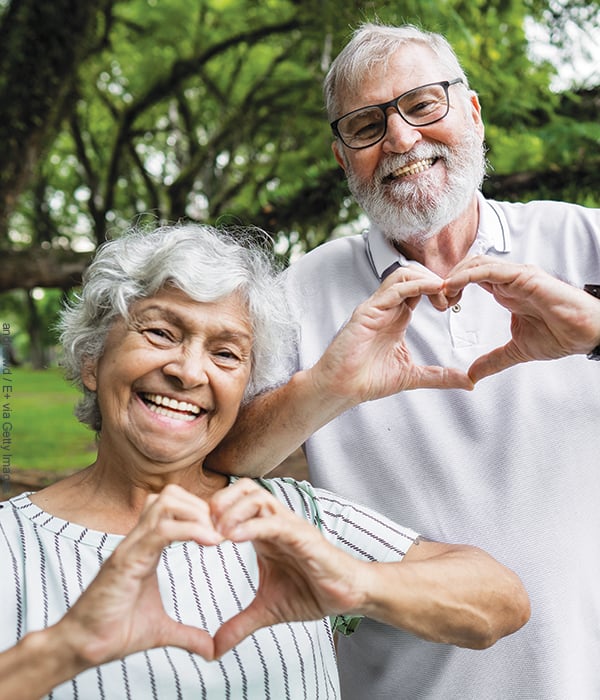
The gesture is created by bringing both hands together so that the thumbs form a point at the bottom and the fingers meet to form the curves of a heart shape at the top. It is usually held for just a moment, just long enough to register with the intended audience. Sometimes the hands are held high overhead, but usually it is a very personal gesture and held close to the chest or the face.
During the pandemic, when shaking hands fell out of standard practice, the hand-heart became a way to communicate warmth without touching. It could be offered across a room, through a window, or on a screen. It required nothing of the other person: no grip, no response, and no agreement about physical contact. As handshakes, hugs, high-fives, and other close-contact greetings were set aside, people turned to fist bumps, waving—and the hand-heart sign.
Thanks to Google, there is even an emoji of the hand-sign. It was added in 2021. It shows up occasionally, but it is not nearly as common as the individual hearts, the thumbs up or down, and the little round faces that show a range of facial expressions.
The hand-heart gesture takes both hands. It is generally expressed close to the heart itself, and it is often accompanied by a smile and a direct meeting of the eyes. It’s personal: the hand-heart is most often displayed by an individual as a direct signal toward another person.
What does it mean? One could suggest several definitions: affection, appreciation, encouragement, support, gratitude, or simply delight in another person. The best definition I have heard is that, when someone shares it with you, they are expressing more than affection or appreciation. They are saying, in effect, “I’m all in with you—heart and hands.” It may be the gesture we most need right now.
As technology intervenes and mediates relationships, as misinformation and conflicting messages fill the interwebs, as AI-generated slop becomes difficult to distinguish from something actually created by a person, this simple analog gesture requiring both hands held near the heart starts to carry unusual weight.
Robots or AI-generated agents may mimic it, but it is simply something they cannot do: stand before another person, bring both hands together near the heart, meet another’s eyes, and offer a wordless sign of personal regard. And we love it. We feel seen, acknowledged, even loved. We are part of the human family, and we know our tribe when we see them.
We catch one another’s eye. We wave across a room. We cheer from the stands. We raise a hand in greeting, reach for another hand in comfort, clap in celebration, and embrace in reunion. In moments of distress, we bring our hands to our face. In emotional moments, we place our hands over our hearts. We sigh, we cry, our shoulders relax as our hands come together—human after all.
Many of the moments we cherish the most are marked by physical gestures in which we connect with one another: a child grasping the much bigger finger of an adult she trusts, a hand gently held at a bedside, a brisk and energetic embrace when we run into an acquaintance in an airport, a high-five with total strangers during a game, a couple walking hand in hand, or old friends linking arms at a memorial. From infancy onward, the human touch—connecting—gives us the assurance that people know who we are and are attentive to how we are feeling.
The hand-heart gesture made popular by rock artists and athletes is sustained by values that undergird and motivate our engagement with the world: affection, gratitude, encouragement, loyalty, and the willingness to direct attention toward another person. It is a simple sign, but it depends on a basic human impulse—to say, without speech or transaction, “I see you, and I am with you.” Or simply, “I’m all in.”
The Scriptures are filled with “all in” moments: people who respond when called, set out without knowing where the road will lead, stay when leaving would be easier, and put their faith into action. Abraham gathers his family close and sets out for a far country. Ruth refuses to abandon Naomi. Jacob places both hands on Ephraim and Manasseh when he blesses them. Moses’ hands grow tired as he holds them up during Israel’s battle, and Aaron and Hur stand beside him to support them. Catching the eye of the angel, Isaiah says, “Here am I. Send me.”
Jesus places His hands on people who come to Him for healing. He takes children in His arms and blesses them. He tells the story of a stranger who, coming upon a man left to die, lifts him up from where he has fallen, uses both hands to nurse him, sets him on the path to recovery, and blesses him with heart and soul, not simply his prayers.
As believers, we are raised with examples of hands raised in prayer, laid on others in blessing, and used in selfless service. Scripture states the principle plainly: “Let us lift up our hearts and hands to God in heaven” (Lamentations 3:41, NIV), and “Let us not love with words or speech but with actions and in truth” (1 John 3:18, NIV).
Being “all in” is at the core of Christian witness because the world needs more than our opinions, theological constructs, convictions, and good intentions. What the world needs now is love, sweet love—and it is expressed in the way we live, in how we share the road together, in the personal signs that we are paying attention. When our concern for one another is real, far from looking away when someone is in need, we know that we are all in, meeting their eyes and their needs.
Many of the moments we cherish the most are marked by physical gestures in which we connect with one another.
Scripture ties this to the love God has shown for His human children but also to how those who have known His steadfast and faithful love will respond to those around them. The injunction could not be plainer: “If anyone has material possessions and sees a brother or sister in need but has no pity on them,” John asks, “How can the love of God be in that person?” He then gives the answer: “Let us not love with words or speech but with actions and in truth” (1 John 3:17-18, NIV).
John asks that—through our attention, our commitments, our hearts, and our hands—we confirm the love we claim to represent. The ultimate hand-heart gestures are the visible indications that we are all in on God’s love for humankind and that our care is personal, steadfast, and active.
So, get your hands moving—you already know what your own personal hand-heart gestures look like. It can be almost anything, provided that in doing it you are all in. Welcome a stranger. Give up your seat. Text an old friend. Offer to help. Say thank you and mean it. Visit someone who cannot easily get out. Bring the meal. Offer the ride. Stay after the meeting to help put away the chairs. Accept the role. Make a sacrifice. Smile at the clerk. Help with a task that has become too much. Be all in.
We are called to make every moment matter. Not by trying to do everything for everyone but by being fully present and attentive to the person that God has placed in your life and who is standing before you waiting for a signal that you are willing to respond with what you can give.
After the resurrection, Jesus responded to the confusion, doubt, hurt, and fear of His closest disciples by showing them His hands. He came to them behind locked doors and said, “Peace be with you!” Then He showed them His hands and His side (John 20:19-20). Luke describes the moment with particular directness. The disciples were startled and frightened. Jesus asked, “Why are you troubled, and why do doubts rise in your minds? Look at my hands and my feet. It is I myself” (Luke 24:38-39, NIV). He stood among them, spoke peace, and showed them the marks of what He had endured.
And then in the closing days of His earthly ministry, when Peter and the disciples had returned to the fishing nets they knew. Jesus met them on the beach at daybreak. They found the Lord tending a charcoal fire and ready with what they needed—His personal care abundantly prepared and available. He invited them, “Come and have breakfast,” then took the bread and fish and gave it to them (John 21:9-13).
It was a hands and heart moment: the moment from which a new community—the church— would find its way forward. From that moment until now, with our hearts and hands combined, we have sought to faithfully proclaim the gospel of Jesus Christ, and in its proclamation, to be all in.
_____________________________
Ray Tetz is the director of communication and community engagement of the Pacific Union and the publisher of the Recorder.
Entregarnos por completo
Por Ray Tetz
La primera vez que recuerdo haberlo visto fue en las imágenes de un concierto publicadas en las redes sociales, cuando una estrella muy popular les hizo la señal a sus admiradores. Durante la Copa Mundial, vi a varios atletas responder al público con ese gesto después de anotar un gol. Quizá lo hayas visto en una videollamada, cuando algún joven de la familia lo hizo en un momento emotivo. Suele aparecer cuando unos amigos posan para una fotografía o cuando alguien ofrece ánimo desde lejos. En algún momento de los últimos veinte años, más o menos, se convirtió en una señal universal de afecto, aliento y aprecio. Me refiero al corazón formado con las manos.
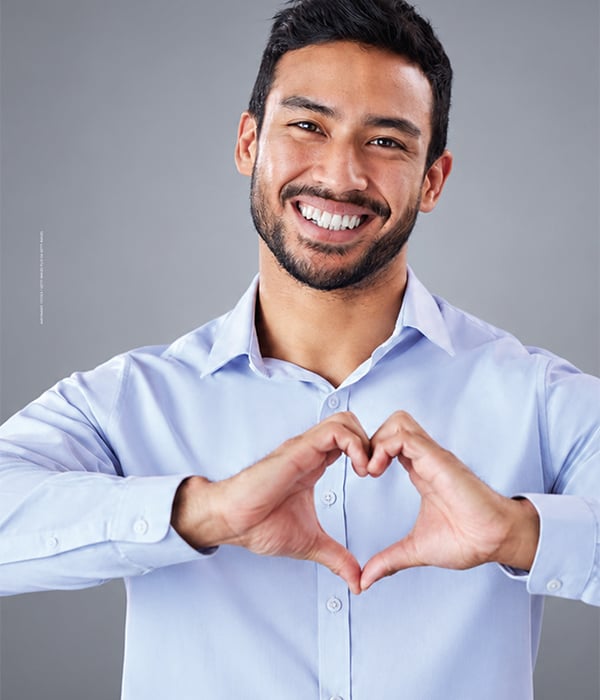
El gesto se hace juntando ambas manos de modo que los pulgares formen una punta en la parte inferior y los dedos se unan para dibujar las curvas de un corazón. Por lo general se mantiene apenas un instante, solo el tiempo suficiente para que lo perciba la persona a quien va dirigido. A veces las manos se levantan muy por encima de la cabeza, pero normalmente es un gesto muy personal que se hace cerca del pecho o del rostro.
Durante la pandemia, cuando estrechar la mano dejó de ser una práctica habitual, el corazón formado con las manos se convirtió en una manera de transmitir afecto sin tocarse. Podía ofrecerse desde el otro lado de una habitación, a través de una ventana o por medio de una pantalla. No exigía nada de la otra persona: ni un apretón, ni una respuesta, ni un acuerdo respecto al contacto físico. Al dejarse de lado los apretones de manos, los abrazos, los choques de manos y otros saludos que requieren cercanía, la gente recurrió al choque de puños, al saludo con la mano y al corazón formado con las manos.
Gracias a Google, hasta existe un emoji de esta señal con las manos. Se añadió en 2021. Aparece de vez en cuando, pero no es ni por asomo tan común como los corazones individuales, los pulgares hacia arriba o hacia abajo y las caritas redondas que representan una amplia gama de expresiones.
Para formar el corazón con las manos se necesitan las dos manos. Por lo general se hace cerca del corazón mismo y suele ir acompañado de una sonrisa y del encuentro directo de las miradas. Es algo personal: casi siempre es un individuo quien lo ofrece como una señal dirigida a otra persona.
¿Qué significa? Podrían proponerse varias definiciones: afecto, aprecio, aliento, apoyo, gratitud o, sencillamente, alegría por la existencia de otra persona. La mejor definición que he oído es que, cuando alguien comparte ese gesto, expresa algo más que afecto o aprecio. En realidad, está diciendo: «Estoy contigo por completo, con el corazón y las manos». Quizá sea el gesto que más necesitamos en este momento.
A medida que la tecnología interviene en las relaciones y las mediatiza, que la desinformación y los mensajes contradictorios saturan internet, y que la basura generada por la inteligencia artificial resulta cada vez más difícil de distinguir de algo creado realmente por una persona, ese sencillo gesto analógico —que requiere ambas manos cerca del corazón— comienza a adquirir una importancia inusitada.
Los robots o los agentes generados por inteligencia artificial podrán imitarlo, pero hay algo que sencillamente no pueden hacer: presentarse ante otra persona, juntar ambas manos cerca del corazón, mirarla a los ojos y ofrecerle una señal silenciosa de consideración personal. Y a nosotros nos encanta. Nos sentimos vistos, reconocidos, incluso amados. Formamos parte de la familia humana y reconocemos a los nuestros cuando los vemos.
Nuestras miradas se encuentran. Nos saludamos desde el otro lado de una habitación. Vitoreamos desde las gradas. Levantamos una mano para saludar, buscamos otra para ofrecer consuelo, aplaudimos para celebrar y nos abrazamos al reencontrarnos. En momentos de angustia, nos llevamos las manos al rostro. Cuando nos embarga la emoción, colocamos las manos sobre el corazón. Suspiramos, lloramos, nuestros hombros se relajan mientras juntamos las manos. Humanos, después de todo.
Muchos de los momentos que más atesoramos están marcados por gestos físicos mediante los cuales nos relacionamos unos con otros: una niña que aferra el dedo mucho más grande de un adulto en quien confía; una mano sostenida con ternura junto a la cama de un enfermo; un abrazo vigoroso y efusivo al encontrarnos con un conocido en un aeropuerto; chocar las manos con completos desconocidos durante un partido; una pareja que camina tomada de la mano; o viejos amigos que entrelazan los brazos en un servicio conmemorativo. Desde la infancia, el contacto humano —esa conexión— nos da la seguridad de que otros saben quiénes somos y están atentos a lo que sentimos.
El gesto del corazón con las manos, popularizado por artistas de rock y deportistas, se sustenta en valores que fundamentan y motivan nuestra relación con el mundo: afecto, gratitud, aliento, lealtad y la disposición a dirigir nuestra atención hacia otra persona. Es una señal sencilla, pero nace de un impulso humano fundamental: decir, sin palabras ni transacciones: «Te veo y estoy contigo». O, sencillamente: «Estoy contigo por completo».
Las Escrituras están llenas de momentos de entrega total: personas que responden cuando son llamadas, se ponen en marcha sin saber adónde las conducirá el camino, se quedan cuando sería más fácil partir y llevan su fe a la acción. Abraham reúne a su familia y parte hacia una tierra lejana. Rut se niega a abandonar a Noemí. Jacob coloca ambas manos sobre Efraín y Manasés cuando los bendice. Las manos de Moisés se cansan mientras las mantiene en alto durante la batalla de Israel, y Aarón y Hur se colocan a su lado para sostenerlas. Al encontrarse con la mirada del ángel, Isaías dice: «Heme aquí. Envíame a mí».
Jesús pone las manos sobre quienes acuden a él en busca de sanidad. Toma a los niños en sus brazos y los bendice. Cuenta la historia de un extranjero que, al encontrar a un hombre abandonado a su suerte, lo levanta del lugar donde ha caído, emplea ambas manos para cuidarlo, lo encamina hacia la recuperación y lo bendice con el corazón y el alma, no solo con sus oraciones.
Como creyentes, crecemos rodeados de ejemplos de manos levantadas en oración, colocadas sobre otros para bendecirlos y empleadas en el servicio desinteresado. Las Escrituras expresan el principio con claridad: «Levantemos el corazón y las manos al Dios del cielo» (Lamentaciones 3:41), y «No amemos de palabra ni de labios para afuera, sino con hechos y de verdad» (1 Juan 3:18).
Entregarnos por completo constituye el corazón del testimonio cristiano, porque el mundo necesita algo más que nuestras opiniones, construcciones teológicas, convicciones y buenas intenciones. Lo que el mundo necesita ahora es amor, dulce amor, y ese amor se expresa en nuestra manera de vivir, en cómo vamos juntos por el camino y en las señales personales que demuestran que prestamos atención. Cuando nuestra preocupación por los demás es verdadera, en vez de apartar la mirada cuando alguien está necesitado, nos entregamos por completo, miramos a esa persona a los ojos y atendemos sus necesidades.
Las Escrituras vinculan eso con el amor que Dios ha mostrado por sus hijos, pero también con la manera en que quienes han conocido su amor constante y fiel se relacionarán con quienes los rodean. La exhortación no podría ser más clara: «Si alguien que posee bienes materiales ve que su hermano está pasando necesidad y no tiene compasión de él», pregunta Juan, «¿cómo se puede decir que el amor de Dios habita en él?». Luego da la respuesta: «No amemos de palabra ni de labios para afuera, sino con hechos y de verdad» (1 Juan 3:17-18).
Juan pide que, mediante nuestra atención, nuestros compromisos, nuestro corazón y nuestras manos, confirmemos el amor que afirmamos representar. Los gestos más sublimes del corazón con las manos son las señales visibles de que abrazamos por completo el amor de Dios por la humanidad y de que nuestro cuidado es personal, constante y activo.
Así que pon las manos en movimiento; ya sabes cómo son tus gestos personales del corazón con las manos. Puede ser casi cualquier cosa, siempre que al hacerla se entregue por completo. Da la bienvenida a un desconocido. Cede su asiento. Envía un mensaje a un viejo amigo. Ofrécete a ayudar. Da las gracias y dilo de corazón. Visita a alguien que no puede salir con facilidad. Llévale comida. Ofrécete a transportarlo. Quédate después de la reunión para ayudar a guardar las sillas. Acepta la responsabilidad. Haz un sacrificio. Sonríe al empleado. Ayuda con una tarea que se ha vuelto demasiado pesada. Entrégate por completo.
Estamos llamados a hacer que cada momento cuente. No procurando hacerlo todo por todos, sino estando plenamente presentes y atentos a la persona que Dios ha colocado en nuestra vida y que está ante nosotros, esperando una señal de que estamos dispuestos con lo que podamos hacer.
Después de la resurrección, Jesús respondió a la confusión, las dudas, el dolor y el temor de sus discípulos más cercanos mostrándoles las manos. Se presentó ante ellos a pesar de que las puertas estaban cerradas y dijo: «¡La paz sea con ustedes!». Luego les mostró las manos y el costado (Juan 20:19-20). Lucas describe el momento con especial franqueza. Los discípulos estaban sobresaltados y asustados. Jesús les preguntó: «¿Por qué se asustan tanto? ¿Por qué les vienen dudas? Miren mis manos y mis pies. ¡Soy yo mismo!» (Lucas 24:38-39). Se puso en medio de ellos, les habló de paz y les mostró las marcas de lo que había padecido.
Y después, en los últimos días de su ministerio terrenal, cuando Pedro y los discípulos habían regresado a las redes de pesca que tan bien conocían, Jesús fue a su encuentro en la playa al amanecer. Encontraron al Señor atendiendo un fuego de carbón, preparado ya lo que necesitaban: su cuidado personal, dispuesto y disponible en abundancia. Los invitó: «Vengan a desayunar». Luego tomó el pan y el pescado y se los dio (Juan 21:9-13).
Fue un momento de manos y corazón: el momento a partir del cual una nueva comunidad —la iglesia— encontraría el camino hacia adelante. Desde entonces y hasta ahora, uniendo el corazón y las manos, hemos procurado proclamar fielmente el evangelio de Jesucristo y entregarnos por completo a esa proclamación.
_____________________________
Ray Tetz es director de Comunicación y Participación Comunitaria de la Pacific Union y director del Recorder.